Pick your machine, tell us the symptom, answer a few quick questions — and get the most likely causes, the fix step by step, and the exact tools and parts to grab today.
Cheapest fixes firstStep-by-step repairsParts & tools near you
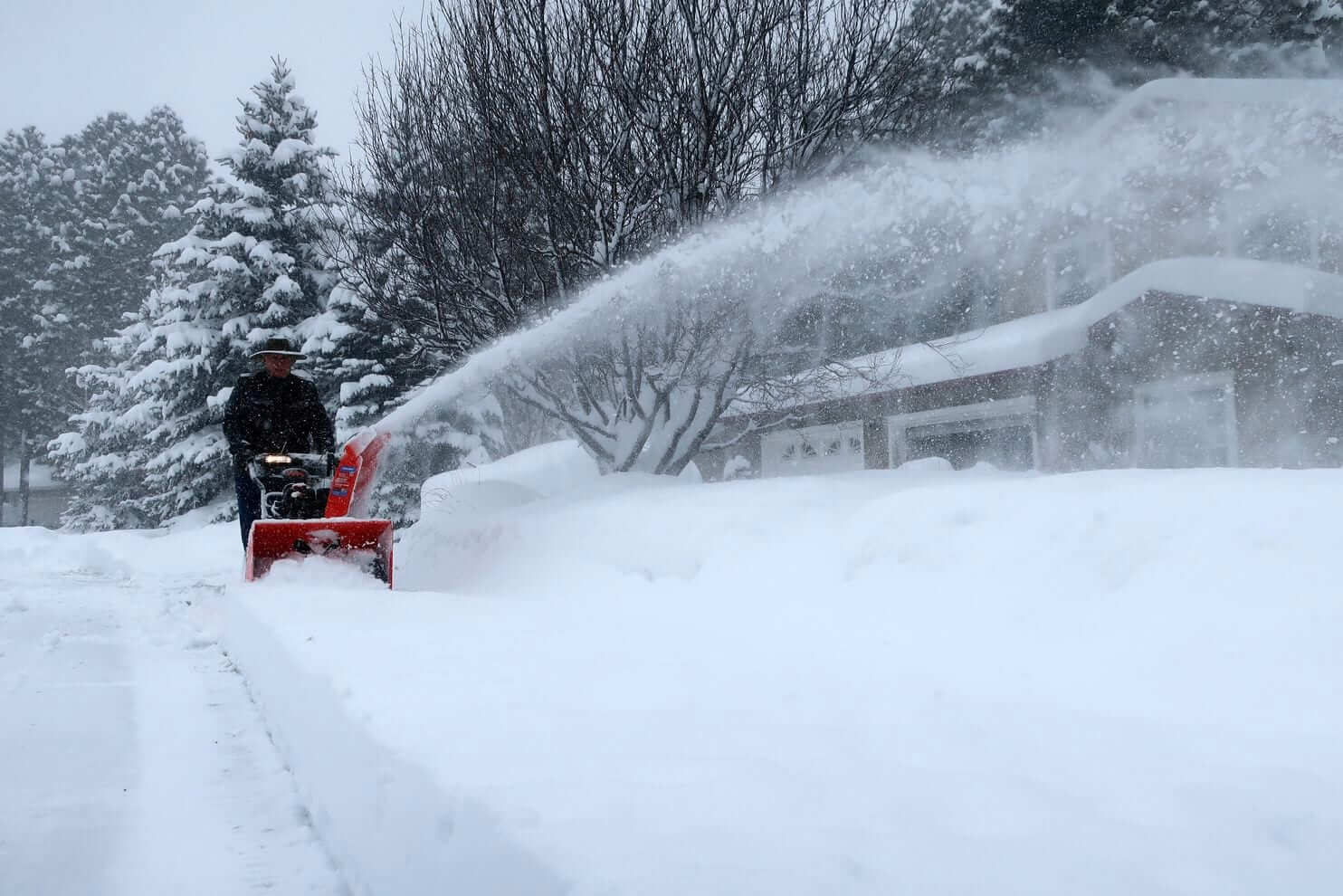
First snow, deep driveway — the morning most snowblowers pick to refuse to start. Run the diagnosis before you reach for the shovel.
Minnesota winter readiness
First snow is coming — is the snowblower ready?
Most snowblowers that "died over the summer" just have stale gas and a gummed-up carburetor. Ten minutes of checking now beats shoveling a wet driveway by hand later: fresh fuel, a look at the primer bulb and spark plug, and shear pins in the drawer. Run the diagnosis before the storm does the scheduling for you.
Every fix ends with a parts list. Enter your ZIP once and each item links to that product's search at the stores that actually carry that kind of item — hardware stores for tools and yard parts, O'Reilly Auto Parts and NAPA for car parts — so you can check today's pickup stock at your local store. Things no hardware store sells, like gasoline itself, get a plain note instead of a store link.
Enter a valid 5-digit ZIP code.
📍 Pickup near
Step 1
What are you working on?
Tap your machine to start the diagnosis.
Every engine needs three things
1 · Fuel
Fresh gas, reaching the cylinder. Old gas and clogged carburetors cause the large majority of no-starts — especially after a machine sits all season.
2 · Spark
A strong blue spark, at the right moment. A fouled plug is a five-minute, few-dollar fix — which is why it's one of the first things the flows check.
3 · Compression
The piston has to squeeze the fuel-air mix. Compression problems are rarer — and the flows save them for last, after the cheap stuff is ruled out.
Troubleshooting guides — yard, boat & driveway
Prefer to read instead of clicking through questions? These are the same checks the diagnosis flows run, written out per machine and symptom — snowblowers, mowers, generators and chainsaws, all three boat machines (outboard, inboard + sterndrive, and personal watercraft), and now cars too. The causes, in the order a mechanic would rule them out, cheapest first.
Snowblower troubleshooting
Won't start after sitting all summer or winter
This is the most common snowblower problem there is, and it's almost never the engine. Gasoline starts going stale in as little as 30–60 days, and by the time the first storm hits, the carburetor's tiny jets are usually varnished shut. Drain the tank and carb bowl, refill with fuel bought this season, and add stabilizer. If it still won't fire, check the unglamorous stuff before anything expensive: the safety key pushed fully in (the engine cannot spark without it), the fuel valve open, the choke on full, and the primer bulb — if it's cracked or stays flat when pressed, it's pumping air instead of fuel and a cold engine will crank dry forever. A fouled spark plug is the next suspect; a cord that pulls with almost no resistance points the other way, toward low compression.
Starts, then dies
When a snowblower dies on a timer — runs a minute or two, quits, restarts after sitting — loosen the fuel cap. A hiss of air rushing in means the cap's vent is clogged and the tank is vacuum-locked; clean the vent or replace the cap. Dying the moment you open the choke or engage the auger usually means a partially blocked main jet: enough fuel to idle on choke, not enough to work.
Throws snow weakly, or one auger doesn't turn
That's rarely the engine. A snapped shear pin leaves an auger spinning free — it's a designed weak point, cheap and replaceable in the driveway — and a glazed or stretched drive belt slips under load exactly when the snow gets deep. Check pins and belt before touching the carburetor.
Lawn mower troubleshooting
Won't start
Start with fuel age — a mower that sat all winter with gas in it is the same stale-fuel story as any small engine — then the air filter. A filter packed with last season's dust chokes the engine rich and can foul the plug on top of it. Pull the plug and read it: black and sooty says too much fuel or too little air; wet says flooded or no spark. If the mower was just tipped for cleaning or a blade change and now smokes heavily, that's oil that ran into the filter and cylinder — it usually burns off in a few minutes once the filter is replaced.
Runs rough or surges
A steady hunting rhythm — revs rising and falling on their own — is usually the governor linkage: gummed pivots or a stretched spring that can't hold speed steady. Random missing and stumbling points back at the spark plug or stale fuel. Roughness that crept in gradually over weeks is very often just the air filter loading up.
Lacks power in tall grass
Before blaming the engine, flip it over (plug wire off, air-filter side up) and look: a dull or bent blade and a deck packed with dried clippings steal more power than most engine faults. A sharp blade on a scraped-clean deck is the single biggest power restoration on a mower. If the engine itself won't rev, work the fuel side — a half-blocked main jet starves it exactly when it works hardest.
Outboard motor troubleshooting
Cranks but won't start
Two five-second checks cause a huge share of outboard no-starts: the kill-switch lanyard clipped in (no lanyard, no spark — by design) and the vent screw on a portable tank opened a turn or two (a closed vent starves the motor as surely as an empty tank). Then squeeze the primer bulb until it's firm; if it never firms up, a fuel connector is half-seated or the line is passing air instead of fuel.
Starts, then dies
If squeezing the primer bulb by hand keeps it alive, the engine's fuel pump is weak or the tank pickup is clogging — you're doing the pump's job for it. Dying after a minute or two with a restart after sitting is the same tank-vent vacuum lock as any other engine; outboards just hide it better.
Steam instead of a tell-tale stream
White "smoke" that's really steam, with a weak or missing tell-tale, means cooling water isn't circulating. Stop the motor — an overheated outboard can be destroyed in minutes. Check the lower-unit intakes for weeds or plastic first; if they're clear, the water pump impeller is worn out. It's a rubber wear part meant to be replaced every couple of seasons, and it fails exactly like this, especially after storage.
Inboard + sterndrive troubleshooting
For MerCruiser and Volvo Penta style gas sterndrives — carbureted and fuel-injected (MPI/EFI). Run the bilge blower four minutes and sniff for fuel fumes before any start attempt: that's not ceremony, that's the rule that keeps engine boxes from exploding.
Nothing happens — or it cranks with no spark
Work the pre-flight trio before touching a tool: battery switch ON (and on a live bank), shifter fully in the neutral detent (the neutral safety switch blocks the starter otherwise), and the kill-switch lanyard clipped in (no lanyard, no spark). That trio strands more sterndrive owners than every mechanical fault combined. After that it's the marine version of the usual order: battery terminals corroded in the damp bilge, stale fuel from a long winter, and — on carbureted engines — a distributor cap full of condensation and green corrosion. Pop the cap after storage; a damp cap is a five-minute diagnosis.
Dies the instant you shift into gear
On a MerCruiser Alpha, that's the shift-interrupt system doing its job too well. The switch is meant to cut the ignition for a split second so the gears can mesh; when the lower shift cable gets stiff with age, it holds the switch tripped and kills the engine. Idles perfectly in neutral, dies cleanly on every shift, in both directions — blame the cable first, the switch second. Volvo Penta drives use a cone clutch instead, so a Volvo that dies on shifting points at idle speed or the clutch itself.
Starts cold, won't restart hot
That's vapor lock, the carbureted sterndrive's signature fault: engine-box heat boils fuel in the lines after shutdown, and the engine cranks dry until everything cools — usually 30 to 60 minutes. Vent the engine box, run the blower, and wait rather than crank. Fuel lines resting against hot risers make it worse; reroute or insulate them. Injected engines mostly cured this — an MPI hot-no-start points at the fuel pump and vapor separator instead.
Steam from the exhaust, temperature climbing
White "smoke" that's really steam means raw water isn't circulating. Slow down or shut down — a hot sterndrive cooks fast. The raw-water impeller is the first suspect: it's a rubber wear part (in the drive on Alphas, engine-mounted on Bravo and Volvo setups) that shreds with age and after dry starts. Then the thermostat, then — on a boat losing top-end power too — exhaust manifolds and risers rusting shut from the inside. Risers are wear parts: roughly 5–7 years in salt water, longer in fresh, and a riser that rusts through can put water in the engine, so don't defer that one.
Generator troubleshooting
Won't start
Check the oil before anything else. Most portable generators have a low-oil sensor that deliberately kills the spark when the level drops — and a generator parked on a slope can trip it with oil that's merely lowish. Level the machine, top the oil to the mark with the spec in the manual, and try again. After that it's the usual small-engine order: fresh fuel (generators sit longer than almost anything), fuel valve open, choke set, plug condition.
Starts, then dies — especially under load
The fuel cap vent vacuum-lock test applies here too: dies on a timer, hisses when you crack the cap, runs again. A generator that cuts out only when appliances kick on may also be honestly overloaded — a fridge or pump's startup surge can be two to three times its running watts, so do that math before opening the engine up.
A safety note that matters more than the repair
Generators cause carbon-monoxide deaths every storm season. Run and test outdoors only, well away from windows and doors, let the engine cool before refueling, and keep cords and hands dry. No diagnosis on this page is worth running one in a garage.
Chainsaw troubleshooting
Won't start — or flooded itself trying
Chainsaws flood faster than any other small engine: a few too many pulls on full choke drowns the plug, and every pull after that makes it worse. If you smell strong raw gas, stop pulling. Choke off, throttle held open, ten pulls to blow it out — or pull the plug, dry it, and clear the cylinder. A saw that sat since last season gets the same stale-fuel and carb treatment as everything else, plus one saw-specific failure: fuel lines that perish and crack inside the tank, invisible until you go looking.
Runs rough, races, or dies when throttled
That pattern is a lean mixture: cracked intake boot, perished lines, or a loose carburetor letting in air the carb didn't measure. Saws with adjustable jets add one more cause — mixture screws drifted or "tuned" wrong. Reset the high and low screws to the manual's starting point and tune from there, and make sure the chain does not move at idle; a creeping chain is a clutch problem for a shop, not an adjustment to live with.
Cuts slowly and throws dust instead of chips
That's not the engine — that's the chain. Chain sharpness is chainsaw power: a dull chain makes the engine work twice as hard for half the cut and wears the bar doing it. File it or replace it, and check the spark arrestor screen on the muffler while you're at it; a carbon-caked screen strangles the exhaust and the power with it.
Personal watercraft (jet ski) troubleshooting
For Sea-Doo, Yamaha WaveRunner, and Kawasaki Jet Ski style sit-down skis, 2-stroke and 4-stroke. The two rules before anything else: a jet ski has no brakes and no steering without thrust — and the jet pump intake gets worked on only with the engine off, lanyard out, and key out. A pump can grab a sleeve or a finger exactly as fast as it grabs a tow rope.
Nothing happens, just clicks, or the display won't wake up
Work the PWC preflight in order. First the lanyard: it must be fully clipped onto its post, because without it there is no crank and no spark, by design. On a Sea-Doo, the DESS key also has to be recognized — a good read beeps twice; a long beep or a "key not recognized" message means a dirty post, a tired key, or the wrong key for that ski. Clean the post and key contact and try again before suspecting the computer. Second, the battery: personal watercraft are unusually battery-sensitive. A battery that lights the display can still be too weak to crank — and on many models too weak to fire the ignition while cranking, which is the maddening crank-but-no-start with "plenty of battery." Charge it fully, clean the terminals, and have it load-tested; a ski battery that sat all winter is guilty until proven innocent. Third, fuel: on older skis the fuel selector must be ON (not RES, not OFF) and the tank vent clear; on everything, fuel that sat since last season is stale until you prove otherwise.
Sudden power loss with heavy vibration — check the pump first
This is the jet ski's signature failure and it is rarely the engine. The jet pump drinks whatever is under the hull — weeds, sticks, rocks, and most classically a tow rope, which winds itself around the driveshaft in a second. The ski still runs, but thrust collapses and the whole craft buzzes. Shut it off and keep it off. From the intake grate underneath, pull weeds free by hand; a wound rope gets cut off the shaft in pieces with a knife — never unwound by blipping the throttle, and never reached for with the engine running. Damage check afterward: a rock through the pump can bend an impeller blade and chew the wear ring, and both keep stealing thrust after the debris is gone.
Loses thrust gradually — wear ring and impeller
If the intake is clean but the ski has slowly gotten lazier — more RPM, less push, cavitation and spray instead of bite on takeoff — the wear ring has worn oversize. The impeller needs a tight seal against that ring to make pressure; as the gap grows, the pump slips. Ring and impeller are wear parts, replaced together, and on most skis it is an afternoon job with the pump off the back of the craft.
Overheating buzzer or alarm
A ski that beeps and limits power is telling you cooling water stopped moving: the same intake that feeds the pump feeds the cooling system, so weeds and sand clog both. Clear the intake and check the cooling outlet stream. Never run a ski dry for more than a few seconds — the pump and exhaust need water — and only run it on a hose with the flush kit, engine started before the water goes on and water off before the engine, exactly as the manual orders it. A ski that overheats with a clear intake may have a blocked cooling line or a thermostat fault — that is a shop conversation, not a ride-it-and-see.
Storage: the unwinterized ski
Minnesota winters kill stored skis quietly: water left in the pump and exhaust can freeze and crack housings, stale untreated fuel varnishes the system, and mice genuinely do nest in intakes and airboxes. A first-start-of-season failure on a ski that "ran fine in August" is storage until proven otherwise — battery, fuel, a look in the intake and airbox, and a check for chewed wiring before any parts get ordered.
Car troubleshooting — the won't-start guide
For everyday fuel-injected cars and trucks. No carburetors, no pull cords: a modern car needs battery power, a starter that cranks it, fuel delivered under pressure, spark timed by a computer, and the sensor signals that tell the computer the engine is turning. The diagnosis below sorts which one is missing — a cheap OBD2 code reader is the best first tool you can own, because the car usually knows what's wrong and will tell you.
Clicks, or nothing at all — no-crank problems
Rapid clicking with flickering dash lights is a battery that can't deliver: dead, worn out, or — just as often — blocked by green, crusty corrosion on its own terminals. Clean and tighten the terminals before condemning anything; they fool more people than bad starters do. One single solid click and then silence points at the starter or its solenoid. Nothing at all, not even dash lights, is the battery, its main connections, or the ignition switch. A jump-start sorts it fast: starts on a jump means battery or charging system (most parts stores test both, free); still one click with a known-good jump means starter. Also confirm the shifter is fully in Park or Neutral and your foot is on the brake or clutch — the neutral safety switch blocks the starter on purpose, and a shifter that's almost-in-Park is a classic false alarm.
Cranks strong but won't start — fuel or spark
A healthy crank clears the battery and starter. Now listen: turn the key to ON (not start) with the door open and you should hear the fuel pump hum for about two seconds from the tank. No hum: pump, fuse, or relay. Fuel that arrives weakly — a filter long overdue or a pump dying — can also crank forever or catch and die. On the spark side, the crank position sensor is the quiet villain: if it fails, the computer never sees the engine turning, so it fires neither injectors nor coils — endless cranking, no attempt to catch. One that fails only when hot produces the starts-cold, dies-warm, restarts-cooled pattern. Failed ignition coils more often give a rough, misfiring start than a clean no-start, but a dead coil or fouled plugs belong on this list too. Pull the codes first — a stored crank-sensor or misfire code can save you the whole afternoon.
Starts, then dies
Dying right after a jump-start, with the battery light having glowed beforehand, is the alternator: the car ran on battery alone until the battery ran out. Dying at idle, especially just after starting, leans toward air — a split vacuum hose or a dirty throttle body and mass-airflow sensor confusing the computer's idle math. Dying hot and restarting after a cool-down is the crank sensor or fuel pump failing with heat. Each pattern is different; the diagnosis flow asks about timing and warning lights for exactly this reason.
Runs rough, lacks power, or smokes
A flashing check-engine light means a misfire bad enough to damage the catalytic converter — slow down and get it read soon; coils and plugs are the usual cause. Power loss splits in two: if the engine revs climb but the car doesn't accelerate with them, that's the transmission slipping, not the engine — while a bogging, won't-rev engine points at fuel delivery or a restricted exhaust, and a clogged catalytic converter is a shop job, full stop. Smoke reads by color, same as any engine: blue is burning oil (worst at startup suggests valve seals, constant suggests rings), black is unburned fuel, and white smoke that smells sweet with a dropping coolant level is coolant getting into the cylinders — a head-gasket warning. That last one is a stop-driving-and-call-a-shop problem, not a keep-topping-it-up problem.
Step 2
What's it doing?
Sharpen it: pick your engine (optional)
Choose your make and engine family and known issues for that engine move to the top of your results, flagged “Common on your model,” with parts searches pre-filled for your model. Not sure? Leave it on Skip — the diagnosis works exactly the same without it. 40 engine profiles covered.
Safety first —Work on a cool engine. Disconnect the spark plug wire before reaching near blades, augers, or chains, and keep fuel away from sparks and open flame.
Troubleshoot 101 exists because of a familiar Saturday morning: a machine that ran fine when you put it away refuses to start when you need it, and the internet offers you either a 40-minute video or a forum thread from 2011. This site is the middle path — a guided diagnosis that works the way a good mechanic thinks.
How it works
Pick your machine and the symptom, then answer a few plain questions about what you see, hear, and smell. Your answers rank the likely causes, most likely first, and each one comes with the fix step by step, a time and difficulty estimate, the safety notes that actually matter for that job, and the specific tools and parts you'll need — each linked to stores near you, so you can check pickup stock before you drive anywhere.
The order is deliberate: cheap and common first. Most no-starts are stale fuel, a clogged carburetor jet, or a five-dollar spark plug — not a dead engine. The flows rule out the inexpensive causes before they ever suggest opening an engine up, and when a job genuinely is shop work, they say so.
Who's behind it
Troubleshoot 101 is built and maintained by Leo, in Minnesota — someone who fixes his own boats, cars, and small engines, and got tired of watching neighbors haul fixable machines to the shop (or the curb) over a gummed-up carburetor. The snowblower flow leads the site because in Minnesota, the first snowstorm is when this matters most.
What it covers — and what's next
The diagnosis also offers optional engine-model profiles — 40 curated profiles covering the engine families people own most (Briggs & Stratton, Honda GX and GCV, Kohler, MerCruiser, Sea-Doo Rotax, Silverado 5.3 / 6.2, F-150, Pentastar 3.6, Theta II, Subaru EJ25 and more). Pick yours and issues commonly reported on that engine are flagged in your results and parts searches are pre-filled with your model. Today the site covers eight machines: snowblowers, lawn mowers, outboard motors, inboard and sterndrive boat engines (MerCruiser and Volvo Penta style), personal watercraft (jet skis), portable generators, chainsaws, and cars — across the five symptoms that account for nearly every complaint — won't start, starts then dies, runs rough, lacks power, and smokes. More categories are planned, starting with other repairable household machines.
Honest limits
This is general repair guidance for common small engines, not a substitute for your owner's manual. Torque values, plug gaps, fuel-mix ratios, and part numbers vary by model — always confirm against the manual or the label on your old part. Store links open each retailer's own search; prices and stock shown there are the store's, and part fit is yours to verify before buying.
Privacy Policy
Troubleshoot 101 · troubleshoot101.com · Last updated November 8, 2026
The short version
This site has no accounts, no sign-ups, and no forms that send your information anywhere. The diagnosis tool runs entirely in your browser. The only thing you can type in — your ZIP code — never leaves your device.
What we collect
Nothing, directly. Troubleshoot 101 does not ask for your name, email address, or any account information, and it operates no database of visitors. Your answers to the diagnosis questions are processed on your own device, in the page, and are not transmitted to or stored by us.
Your ZIP code
If you enter a ZIP code, it is kept only in the page's memory while you use the site, so store links can point you toward local pickup. It is not saved in cookies or browser storage, it is not sent to us, and it disappears when you close the page. If you follow a store link, that retailer's site may use the location to show nearby stores under its own privacy policy.
Cookies
This site does not set cookies of its own. If advertising is added to the site in the future (for example through Google AdSense), the ad provider may set cookies to serve and measure ads, and this policy will be updated here before or when that happens.
Links to other sites
Fix results link out to retailers — Menards, Home Depot, Lowe's, Harbor Freight, and Walmart, plus O'Reilly Auto Parts and NAPA for car parts — so you can check an item's price and pickup stock. Once you leave troubleshoot101.com, the retailer's own privacy policy governs what it collects; we don't control those sites and receive no information about what you view or buy there.
Hosting
The site is served by Cloudflare Pages. Like any web host, Cloudflare processes standard technical request data (such as IP address and browser type) to deliver the page and protect against abuse, under Cloudflare's own privacy policy. We do not receive personal visitor reports from hosting.
Children
This site is written for adults working on their own equipment and is not directed at children under 13. It collects no information from anyone, including children.
Changes to this policy
If what this site collects ever changes — most likely if advertising or analytics are added — this page will be updated and the date at the top will change. The current version always lives at this page on troubleshoot101.com.