Snowblower guide · Troubleshoot 101
Snowblower won't start?
Fix it before the storm does.
Nine times out of ten, a snowblower that “died over the summer” hasn't died at all — it has stale gas, a varnished carburetor, or a $6 primer bulb. This guide works through every common symptom in the order a mechanic checks them: cheapest and most likely first, shop jobs clearly flagged last.
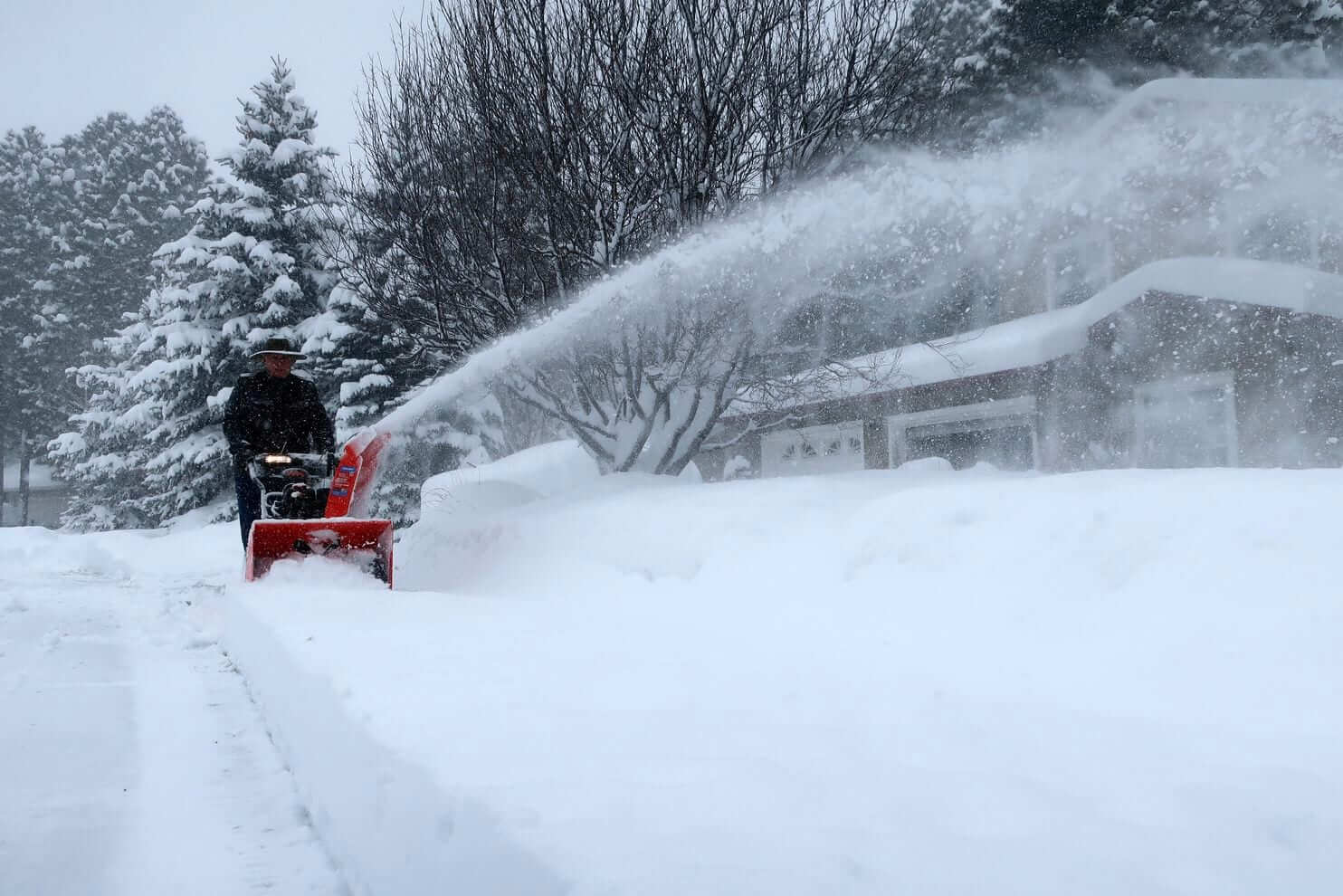
- Safety key pushed fully in? Fuel valve open?
- Choke on FULL, throttle on FAST for a cold start?
- Does the gas smell like gas — or like varnish and paint thinner? Stale fuel is cause #1.
- Primer bulb: does it fill with fuel, or is it cracked and flat?
- Fuel cap: crack it open — a hiss means a vacuum-locked tank (see starts-then-dies).
1 · Snowblower won't start after sitting
This is the most common snowblower problem there is, and it's almost never the engine. Gasoline starts going stale in as little as 30–60 days. Left in the tank over summer, it oxidizes, absorbs moisture, and leaves varnish in the carburetor's tiny jets — passages smaller than a pin. By the first storm, the engine is mechanically fine and simply can't drink.
Work the causes in this order. Each one is cheaper and more likely than the next, and most owners fix it at step 1 or 2.
| Cause | How to tell | Fix time | Cost |
|---|---|---|---|
| Start controls not set | Key not fully in, fuel valve closed, choke off | 2 min | Free |
| Stale fuel | Gas smells sour/varnishy; machine sat 2+ months | 20 min | Price of fresh gas |
| Gummed carburetor | Fresh fuel doesn't help; fires briefly on starter fluid | 30–60 min | $0 clean · $20–45 replace |
| Cracked primer bulb | Bulb split, flat, or never fills with fuel | 15 min | ~$6–12 |
| Fouled spark plug | Plug black, wet, or no blue spark when tested | 10 min | ~$5–9 |
| No spark (coil / kill circuit) | New plug, still no spark with plug grounded | 45 min | $20–40 |
| Low compression | Recoil pulls with almost no resistance | — | Shop job |
The fix, step by step
- Set the start controls — really set them. Push the safety key in until it seats (the engine cannot spark without it, and a half-in key is a classic). Open the fuel shut-off valve. Choke to FULL, throttle to FAST/RUN. On an electric-start model, press the starter in 5-second bursts with rest between — holding it cooks the starter.
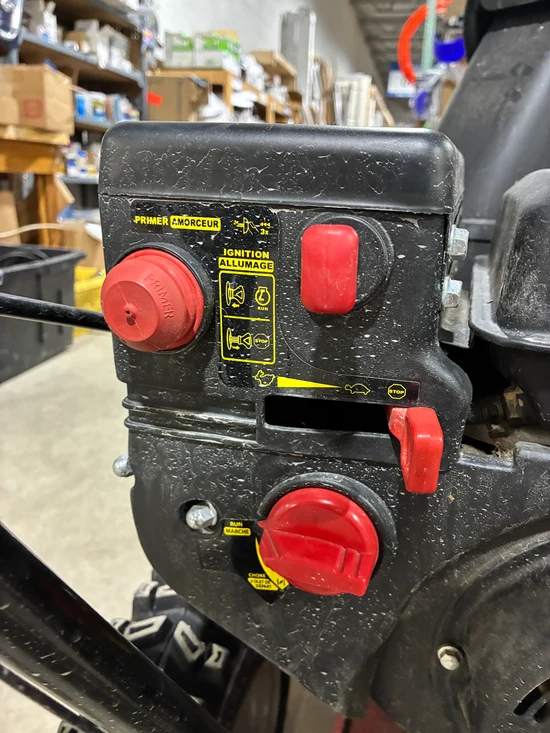
What you're looking for: the start controls live together on the engine shroud — red primer bulb (left), ignition switch, throttle lever, and the red choke dial at the bottom. - Drain the old fuel completely. Siphon the tank, or run the line into an approved container, then drain the carburetor bowl (small bolt at the bottom of the bowl) to empty what's sitting in the carb itself. Dispose of stale fuel per your local rules — don't pour it back in anything.
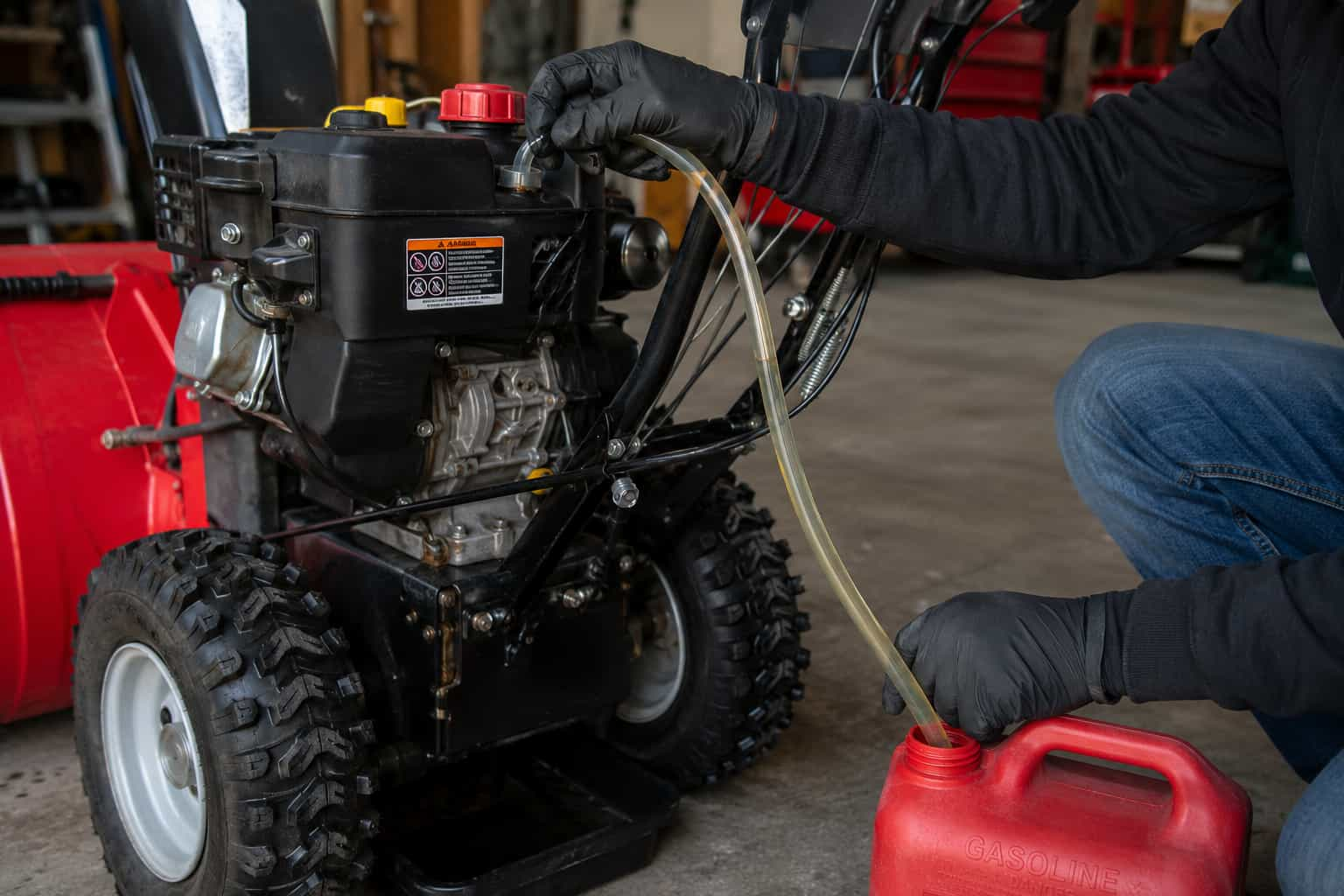
Siphoning the tank: clear hose from the filler neck down into an approved gasoline container — empty the tank before you touch the carburetor bowl. - Refill with fuel bought this season. Fresh gas plus stabilizer. This alone revives a surprising share of “dead” snowblowers, because the bowl refills with fuel that can actually burn.
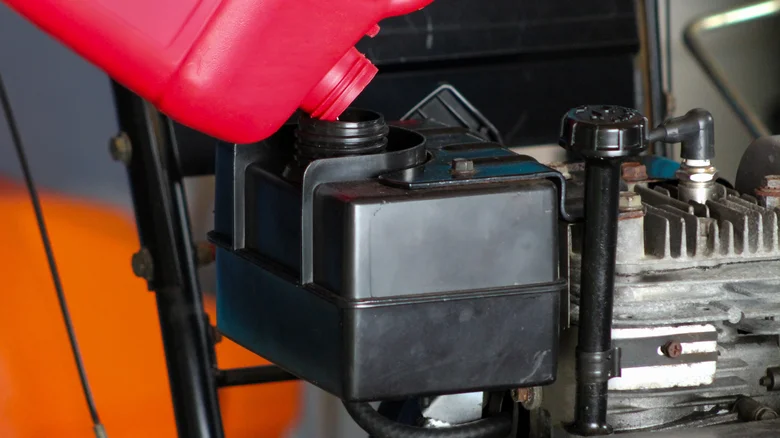
Refill at the filler neck on top of the tank with fuel bought this season — a full refill of fresh gas is the fix, not a top-up over the old fuel. - Prime and watch the bulb. Press the primer 3–5 times. It should fill and firm up with fuel. Cracked, split, or permanently flat? Replace it — two screws and a fuel line on most machines — because a dead bulb pumps air, and a cold engine cranking on air will never catch.
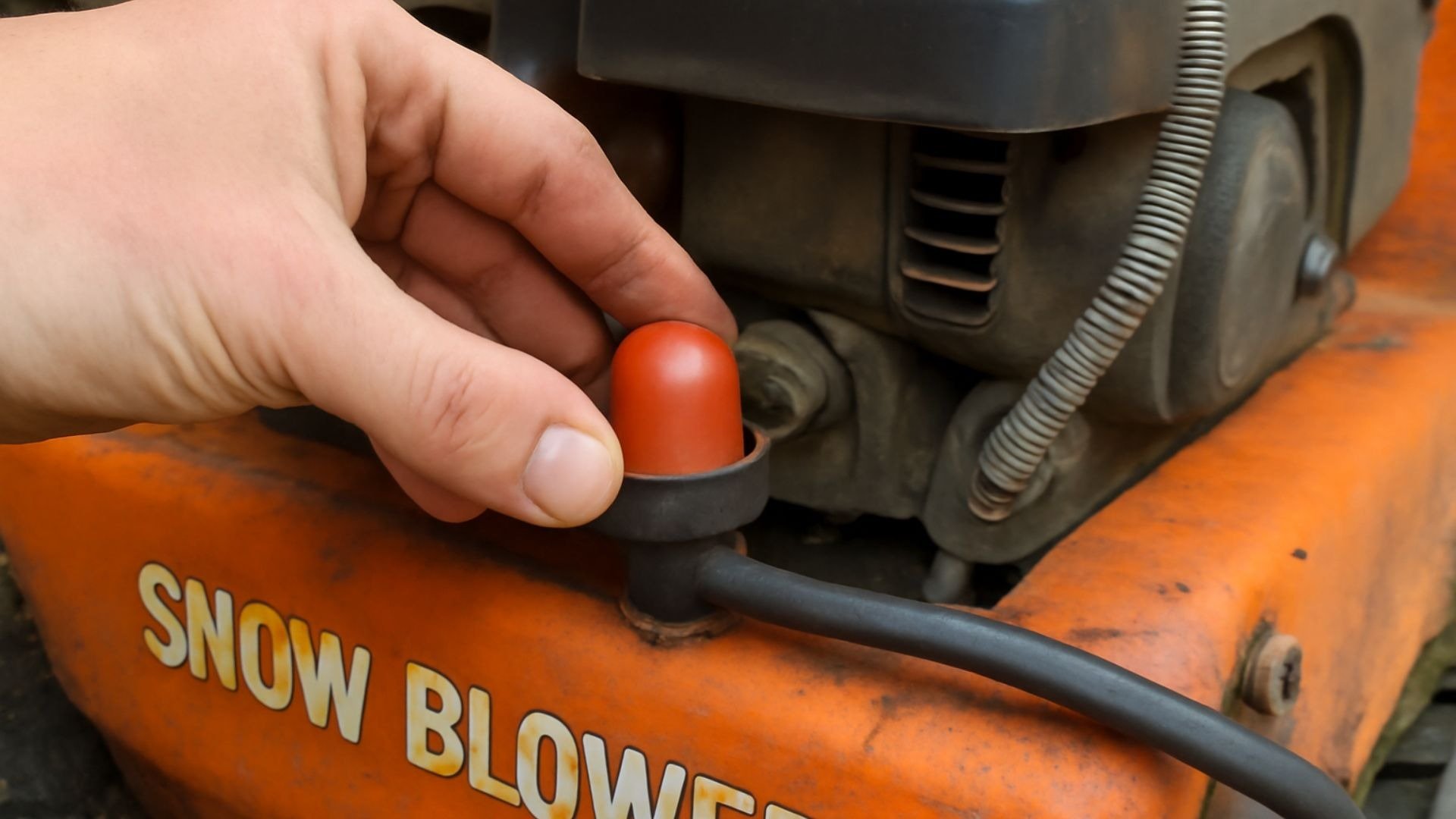
Pressing the primer bulb where it lives, on the engine housing by the carburetor. It should fill and firm up with fuel — cracked, split, or stays flat means replace it. - Pull the spark plug and read it. Black and sooty = rich/fouled. Wet with fuel = flooded or no spark (hold the throttle open, choke off, and pull 8–10 times to clear a flood). White or blistered = overheating. Fouled plugs are cheaper than the time to clean them: replace with the exact plug and gap in your manual.
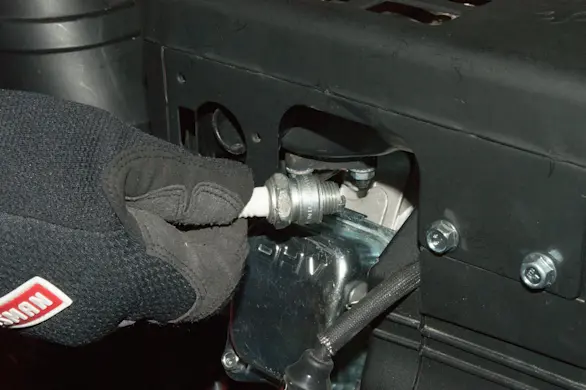
Where the plug hides: on the side of the cylinder head, under the plug boot — pull the boot off, then unscrew the plug with a spark plug socket. 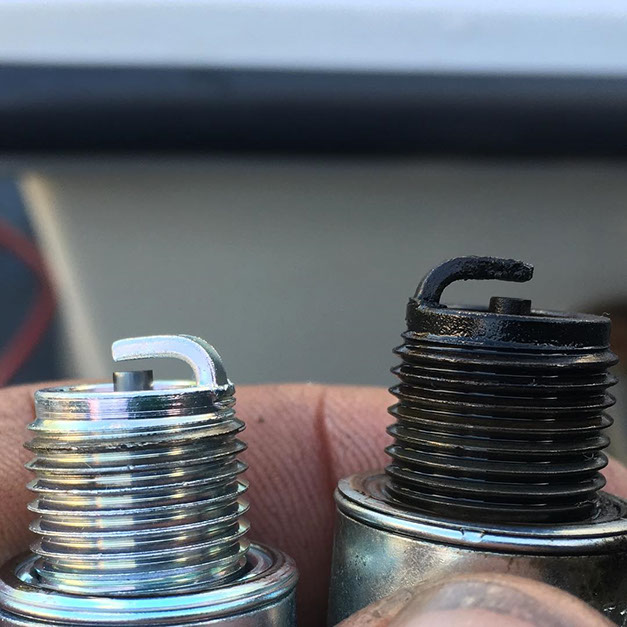
Read the old plug against a new one: bright threads and a clean electrode (left) are healthy; black, sooty, caked deposits (right) mean fouled — replace it, don't bother cleaning it. - If it fires on a sniff of starter fluid but won't stay running, it's the carburetor. Remove the bowl, clean the main jet and emulsion tube with carb cleaner and a soft wire, and reassemble with a fresh bowl gasket if the old one is flattened. On many popular engines a complete replacement carburetor costs $20–45 — often less than a shop's diagnostic fee — and swaps with basic hand tools.
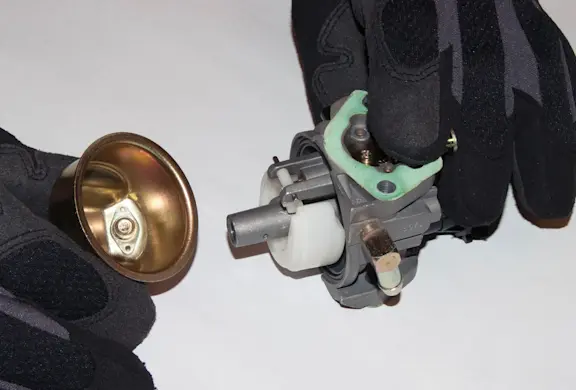
Bowl off: this is what you'll see — the float bowl in one hand (jet bolt in its center) and the float and jet passages in the carb body. Varnish or grit in the bowl confirms the diagnosis.
2 · Starts, then dies
An engine that starts proves it has fuel, spark, and compression — at least for a moment. Dying is about what runs out. When it dies tells you what:
Dies on a timer — runs 1–3 minutes, quits, restarts after sitting
Loosen the fuel cap and listen. A hiss of air rushing in means the cap's vent is clogged and the tank has vacuum-locked: the engine drank until the vacuum beat the fuel flow. Clean the vent passages in the cap or replace the cap (cheap, model-specific). Restarting after a rest — once pressure equalizes — is the signature that confirms it.
Dies the moment you open the choke
The choke is compensating for a lean mixture. Open it and the mix goes too lean to run: a partially blocked main jet, stale fuel, or a pinched/kinked fuel line. This is a carburetor cleaning (section 1, step 6), not an adjustment to live with.
Dies when you engage the auger or hit deep snow
It idles fine but can't make power under load — the same half-blocked main jet, now exposed because working takes three times the fuel of idling. If the engine keeps running but the auger stalls instead, that's not fuel at all: go to section 5 for belts and shear pins.
3 · Runs rough, surges, or only runs on choke
Surging — revs rising and falling in a steady hunting rhythm — is usually the governor: the linkage and spring that hold engine speed steady get gummed pivots or a stretched spring and start over-correcting. Clean the linkage, confirm the spring isn't stretched or hooked in the wrong hole, and don't bend governor arms by guesswork.
Random missing and stumbling points back at the basics: a plug that's breaking down under load, or fuel that's borderline stale. Plug first (it's $6), fresh fuel second.
Only runs on choke is a fuel-starvation diagnosis, full stop: clogged main jet, water in the bowl (a bead of water sits at the bottom and won't burn — drain the bowl), or an air leak at a cracked carburetor gasket leaning the mix out. And if roughness crept in gradually over weeks, check the air filter where your model has one — many snowblowers run a simple screen instead, but a screen packed with debris chokes the engine exactly the same way.
4 · Electric start dead, or the cord pulls wrong
Electric start does nothing
Check the outlet first — plug in a lamp. Snowblower starters draw hard; use a grounded outdoor outlet and a heavy extension cord rated for the load, not the thinnest indoor cord in the garage. Press in short bursts. If the starter whirs but doesn't crank the engine, or the button box/cord is cracked or damaged, stop using it and use the recoil — damaged starter cords are a shock hazard in wet snow conditions.
Recoil pulls with almost no resistance
Either the starter pawls aren't engaging (a starter repair) or compression is genuinely low (a shop conversation). A quick separator: pull slowly — if you feel no “thump-thump” of compression strokes at all, lean shop.
Recoil is brutally hard to pull, or kicks back
A flooded engine hydro-locking, oil overfilled, or — after hitting ice or a curb — a sheared flywheel key throwing the timing off. Pull the plug: if the cylinder is full of fuel, crank it out with the plug out (away from any ignition source), dry the plug, and retry with no choke and no prime.
5 · Auger won't turn, or it barely throws snow
Good news: this section is rarely the engine. Snowblower drive problems are wear items doing their job.
One auger spins free, or neither auger turns
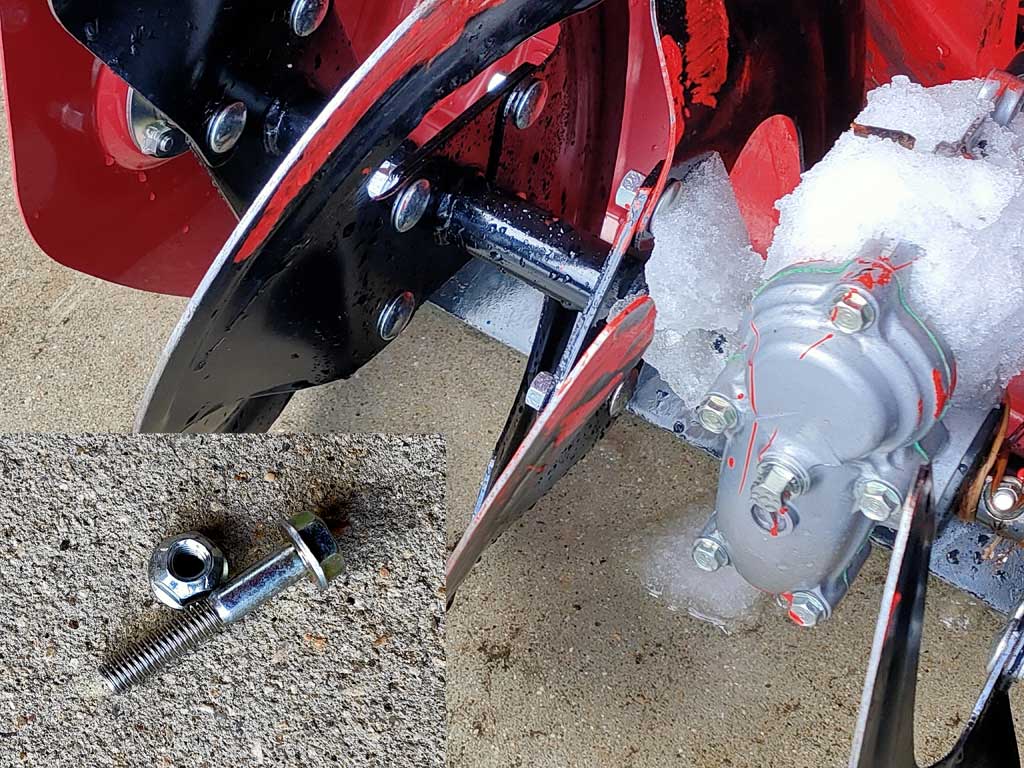
A snapped shear pin — the soft pin through the auger shaft that is designed to break when the auger hits a frozen newspaper, a chunk of ice, or the curb, sacrificing itself to save the gearbox. Replace it only with the correct shear pin for your model. Never substitute a regular bolt: a bolt doesn't shear, so the next impact breaks the gearbox instead of a $3 pin. Keep two spares taped to the handle — everyone who owns a snowblower learns this once.
Augers turn, but snow dribbles out a few feet
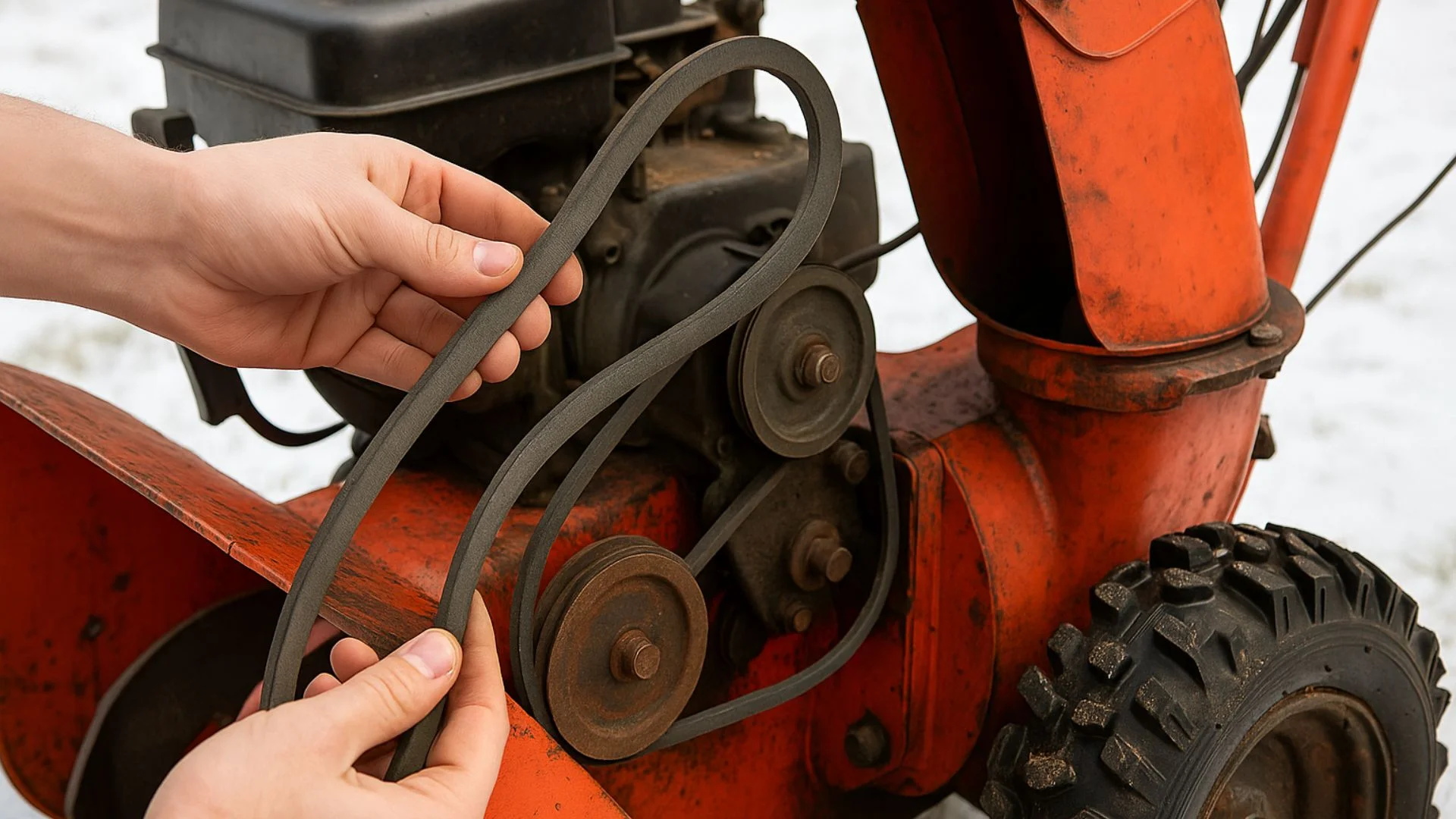
The impeller isn't being driven hard enough: a glazed, stretched, or oil-contaminated drive belt slipping under load. Belts look fine at rest and slip exactly when the snow gets deep. Replace by model number, and check the idler tension while you're in there. Also clear the chute — wet snow packs it solid — with the engine off and a clean-out tool.
Wheels don't drive (self-propel dead)
Same logic, second belt: the traction drive belt, or a friction disc worn smooth on single-speed drive systems. Both are driveway-level replacements with the bottom panel off.
6 · Prevent it: storage & first-snow checklists
Almost every repair above traces back to one spring afternoon. Ten minutes then deletes most of this guide.
End of season (the 10 minutes that matter)
- Add fuel stabilizer and run the engine 5 minutes so treated fuel reaches the carburetor — or drain the tank and bowl dry, per your manual's storage method. Pick one; doing neither is the problem.
- Change the oil while the engine is warm from that run.
- Pull the safety key and store it somewhere you'll find it in November. (You will thank yourself.)
- Check shear pins and belts now, while parts are in stock everywhere — not during the first storm, when every store in the county sells out.
- Store indoors or covered, chute and auger housing hosed clean of salt and slush.
First snow (October, before you need it)
- Start it in the driveway on a dry day. A no-start in October is an errand; in a January storm, it's a crisis.
- Buy fresh fuel for the season — don't start winter on last spring's gas can.
- Confirm the spare shear pins are still taped to the handle.
- Walk your driveway and move the things shear pins die on: frozen newspapers, extension cords, landscape rocks, the curb edge you always forget.
Frequently asked questions
Why won't my snowblower start after sitting all summer?
Almost never the engine itself. Gasoline goes stale in 30–60 days and varnishes the carburetor jets shut. Drain the tank and carb bowl, refill with fuel bought this season, and confirm the safety key is fully in, the fuel valve is open, the choke is on full, and the primer bulb isn't cracked.
Why does my snowblower start and then die after a minute or two?
Loosen the fuel cap — a hiss of air rushing in means a clogged cap vent and a vacuum-locked tank. Dying the moment you open the choke or engage the auger usually means a partially blocked main jet: enough fuel to idle on choke, not enough to work.
Why does my snowblower only run on choke?
It's starved for fuel at normal mixture: a partially clogged main jet, stale fuel, a pinched fuel line, or an air leak at the carburetor gasket. Clean the carburetor first — it fixes the large majority of cases.
Why won't my snowblower auger turn?
Most often a snapped shear pin — a designed weak point that protects the gearbox. Replace it only with the correct shear pin for your model, never a regular bolt. If the augers turn but the impeller doesn't throw, check the auger drive belt.
Why does my snowblower throw snow only a few feet?
A glazed or stretched drive belt slipping under load, a worn impeller, or a chute packed with wet snow. Check the belt first, clear the chute with a clean-out tool (never your hand), and take smaller bites in heavy snow.
My electric start does nothing. What should I check?
Confirm the outlet and extension cord are live and rated for the starter's draw, and press in short 5-second bursts — holding the button overheats the starter. If the cord set is damaged, use the recoil starter instead.
How do I prevent starting problems next year?
At season's end, stabilize the fuel and run treated fuel through the carburetor, or drain the system per your manual. Change the oil, store the key somewhere findable, and start the machine once in October before the first storm.
When is it a shop job, not a driveway fix?
Low compression, a damaged gearbox, a bent auger shaft, or a fuel leak you can't trace to a line or fitting. Everything fuel, spark, belt, and shear-pin related is a realistic home fix.
Still stuck? Run the guided diagnosis
Answer a few questions about your exact machine and symptom on Troubleshoot 101 and get your likely causes ranked, the fix step by step, and the parts to grab near you — the interactive version of this guide.
Start the snowblower diagnosis →If it helped you, consider a tip.
This guide is free, and it stays that way. If it saved you a shop visit — or just a cold morning of pulling a cord that wouldn't catch — a small tip helps keep Troubleshoot 101 running and growing.
Leave a tip