Generator guide · Troubleshoot 101
Generator won't start?
Check the oil first.
Generators fail differently from every other small engine: they sit the longest, they're needed the most urgently, and most of them carry a low-oil sensor that will deliberately stop a healthy engine from starting. This guide works every common symptom in the order a mechanic checks them — cheapest and most likely first, shop jobs flagged honestly last.
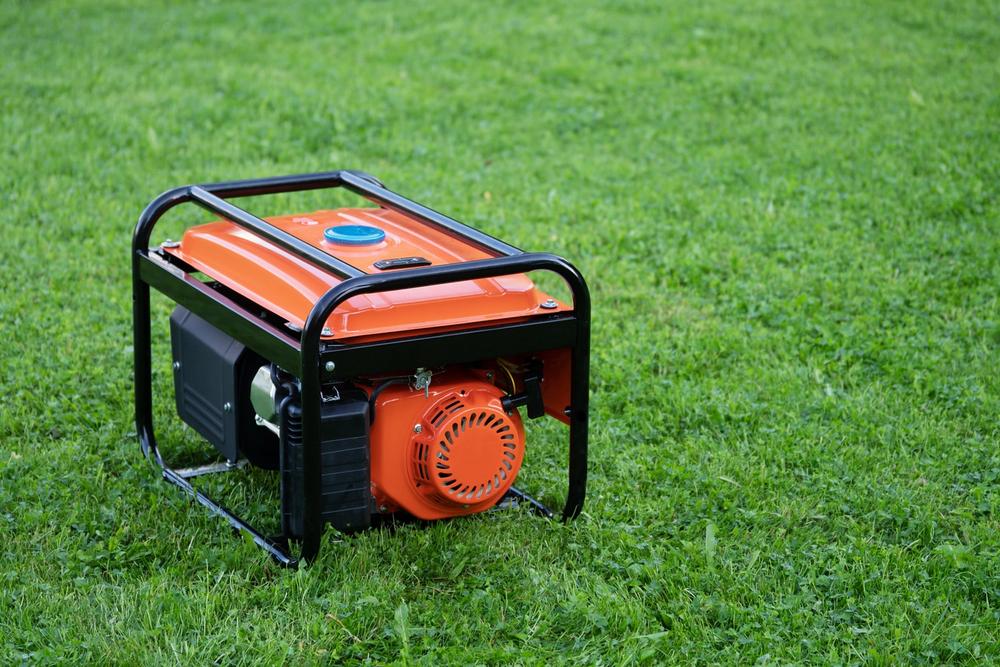
- Is it on level ground, and is the oil at the full mark? The low-oil sensor is cause #1.
- Fuel valve open, engine switch ON, choke set for a cold start?
- Does the gas smell like gas — or like varnish? Generators sit longest, so stale fuel is close behind oil.
- Everything unplugged from the outlets before you try to start it?
- Fuel cap: crack it open — a hiss means a vacuum-locked tank (see starts-then-dies).
1 · Generator won't start
Start where generators are different: the oil. Most portable generators have a low-oil shutdown sensor that deliberately kills the spark when the oil level drops — it protects an engine that often runs unattended. It also means a perfectly good generator refuses to start because the oil is a little low, or because the machine is parked on a slope and the oil has pooled away from the sensor. Level ground and a dipstick check come before everything else on this page.
After oil, it's the familiar small-engine order — and generators sit longer between runs than almost anything else you own, so stale fuel is an even bigger suspect here than on a mower or snowblower.
| Cause | How to tell | Fix time | Cost |
|---|---|---|---|
| Low-oil shutdown tripped | Oil below full, machine on a slope, or oil light flickers while cranking | 10 min | Price of oil |
| Start controls not set | Fuel valve closed, switch off, choke wrong, load still plugged in | 2 min | Free |
| Stale fuel | Gas smells sour/varnishy; machine sat 2+ months | 20 min | Price of fresh gas |
| Gummed carburetor | Fresh fuel doesn't help; fires briefly on starter fluid | 30–60 min | $0 clean · $20–45 replace |
| Fouled spark plug | Plug black, wet, or no blue spark when tested | 10 min | ~$5–9 |
| Dead battery (electric-start models) | Starter clicks or is silent; recoil start still works | 15 min | Charge · or replace |
| No spark with oil full (coil / sensor fault) | New plug, oil full and level, still no spark | — | Shop test |
| Low compression | Recoil pulls with almost no resistance | — | Shop job |
The fix, step by step
- Level it and check the oil — really check it. Set the generator on flat ground. Pull the dipstick, wipe, re-insert per your manual, and read it. Below the full mark? Top up with the exact oil spec in the manual and try again before you touch anything else. If the oil is black and old, change it while you're here — generators sit a lot, and old oil is hard on them.
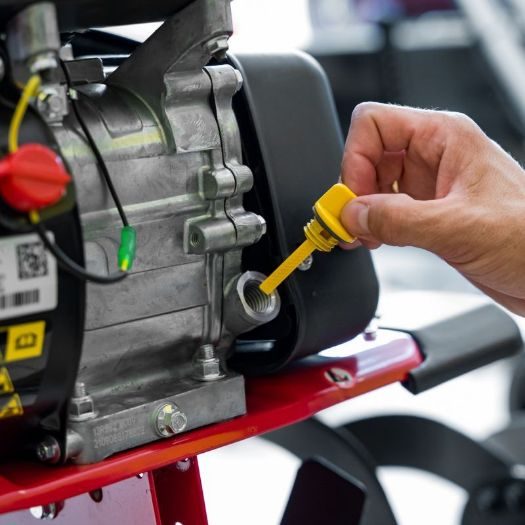
What you're looking for: the dipstick lives low on the engine block — here a yellow cap-dipstick being pulled from its fill port. Wipe it, re-insert, then read the level against the full mark. - Set the start controls and unload it. Fuel valve ON, engine switch ON, choke to START/CHOKE for a cold engine (OFF/RUN once it's warm). Unplug everything from the outlets — a generator asked to start against a connected load is working against itself, and some units won't fire cleanly that way.
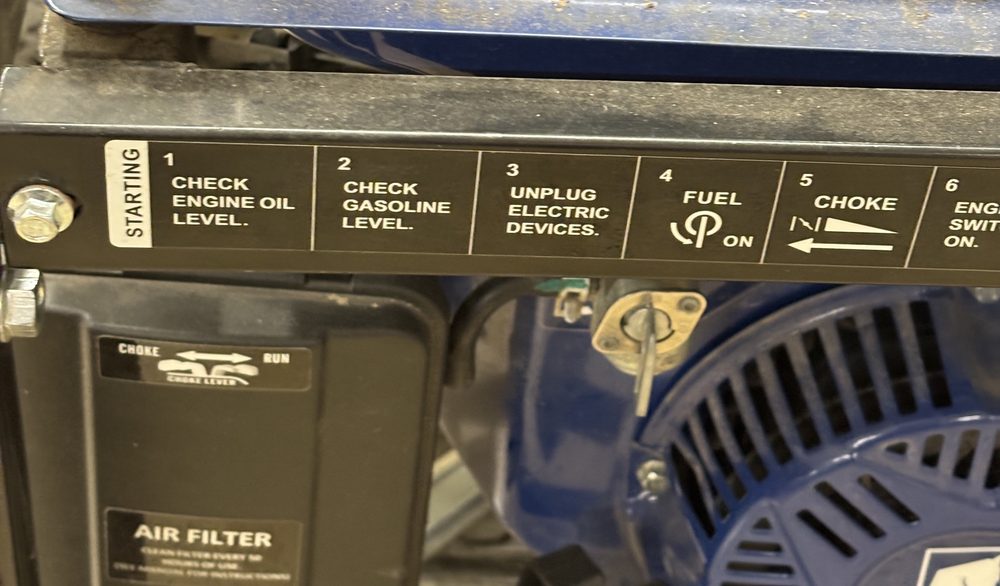
Where the controls live: many generators print the start sequence right on the frame. The fuel valve is the small metal lever under the rail (shown pointing down, ON), and the choke lever sits by the air filter box, labeled CHOKE ↔ RUN. - Drain the stale fuel completely. Siphon the tank into an approved container, then drain the carburetor bowl (small bolt at the bottom of the bowl). Dispose of stale fuel per your local rules.
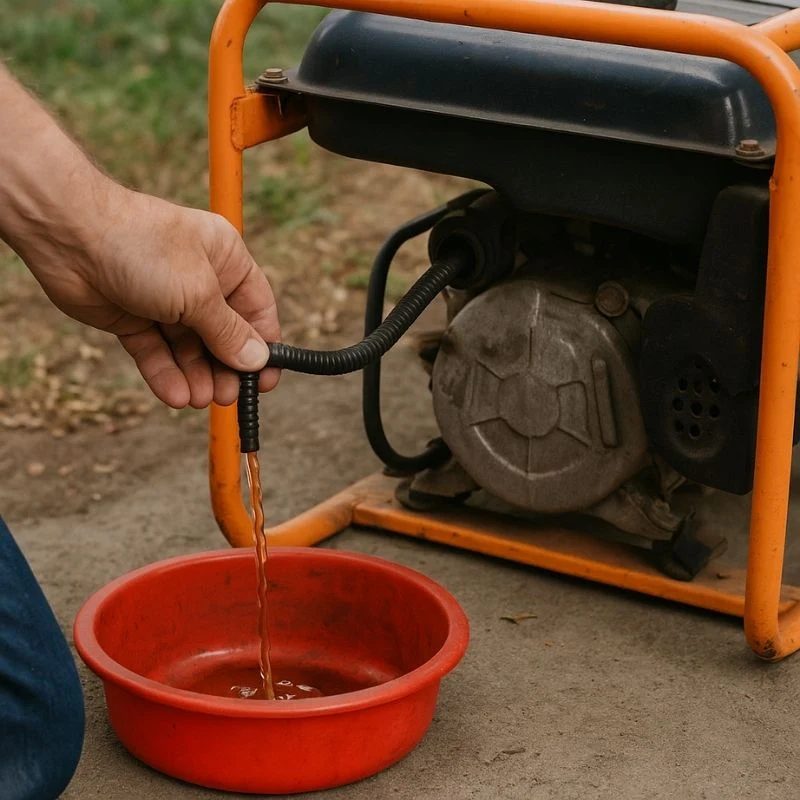
Draining in the field: stale fuel comes out dark and amber, like this stream from the drain hose into a pan. Fresh gas is pale straw-colored — if yours pours tea-colored, it all has to go. - Refill with fuel bought this season. Fresh gas plus stabilizer. On a generator that's been sitting, this step alone — after the oil check — revives a large share of “dead” machines.

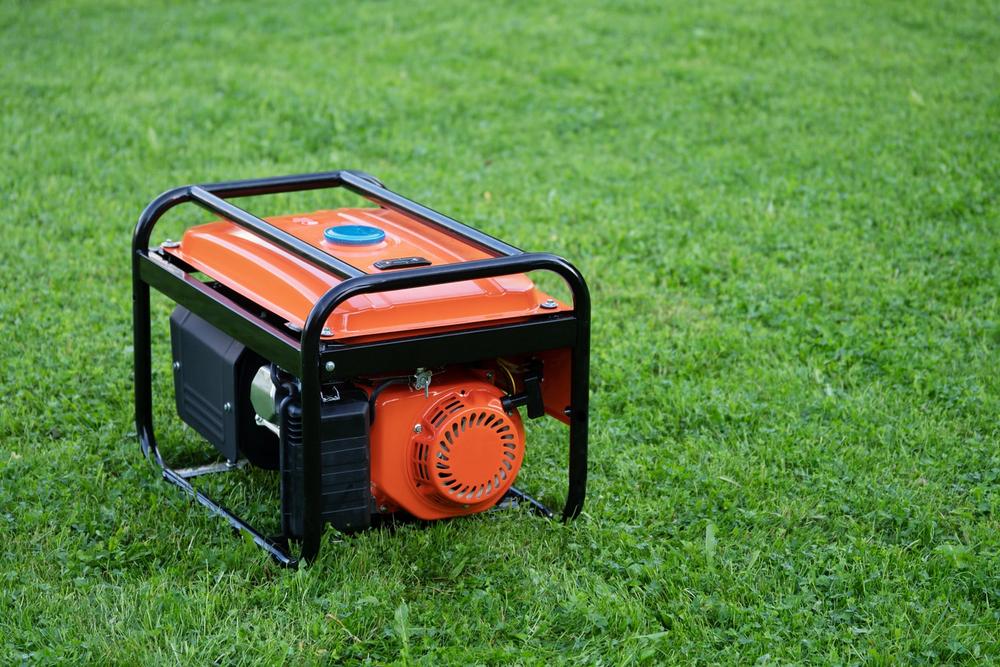
Refilling the right way: can, funnel, and the tank opening on top of the machine. Fill outdoors, engine cool, and leave a little headspace — don't brim it. - Pull the spark plug and read it. Black and sooty = fouled. Wet with fuel = flooded or no spark (choke off, throttle open, pull 8–10 times to clear a flood). Replace a fouled plug with the exact plug and gap in your manual — it's cheaper than the time spent cleaning one.
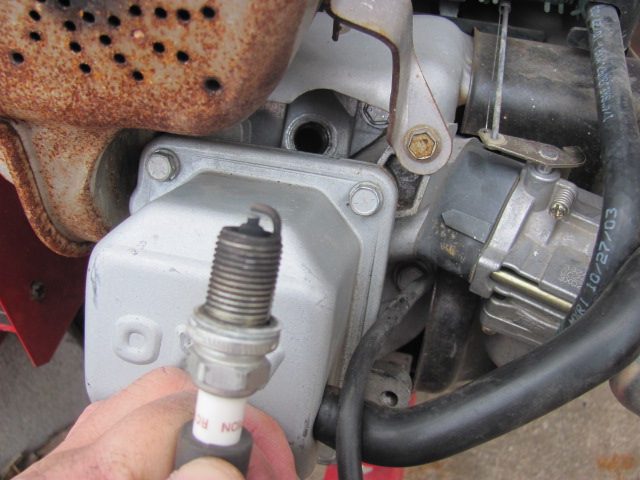
A fouled plug, just pulled: black, sooty electrode — and the empty threaded hole it came out of, top center of the head. If yours looks like this, replace it; a healthy plug's electrode is tan to light gray. - If it fires on a sniff of starter fluid but won't stay running, it's the carburetor. Remove the bowl, clean the main jet and passages with carb cleaner and a soft wire strand (never a drill bit), and reassemble with a fresh bowl gasket if the old one is flattened. On many popular engines a complete replacement carburetor costs $20–45 and swaps with basic hand tools.
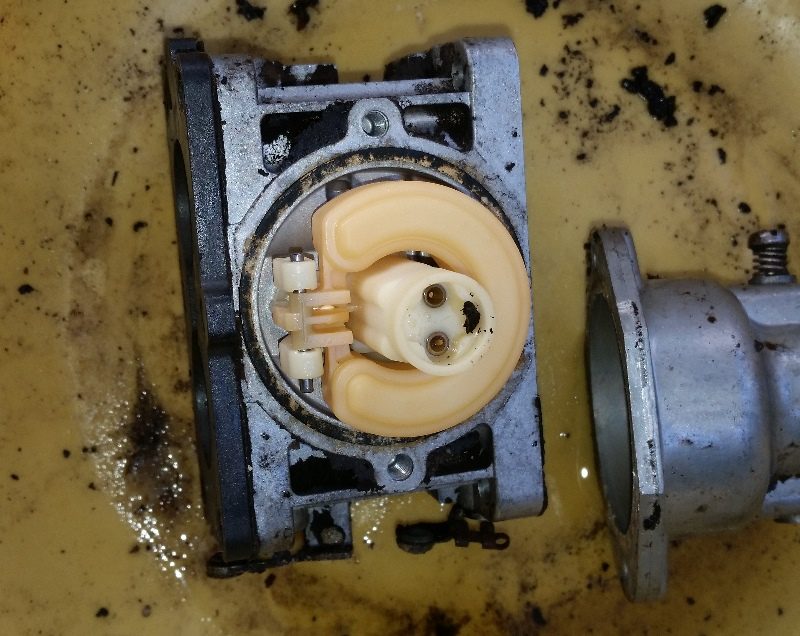
Inside the carburetor with the bowl off (the bowl sits at right): the cream plastic float wraps the central jet tower — those two brass jets in the middle are what you clean. Note the dark varnish grime: that's what stale fuel leaves behind.
2 · Starts, then dies
An engine that starts proves it has fuel, spark, and compression — for a moment. Dying is about what runs out, and when it dies tells you what:
Dies in seconds — and the oil light flickers
That's the low-oil shutdown doing its job, or a faulty sensor pretending to. Level the generator, top the oil to the full mark (not just “some oil on the stick”), and retry. Old, thin oil and a slight slope together trip sensors that either one alone wouldn't.
Dies on a timer — runs 1–3 minutes, quits, restarts after sitting
Loosen the fuel cap and listen. A hiss of air rushing in means the cap's vent is clogged and the tank has vacuum-locked: the engine drank until the vacuum beat the fuel flow. Clean the vent passages or replace the cap (cheap, model-specific). Restarting after a rest — once pressure equalizes — is the signature that confirms it.
Dies the moment you open the choke, or plug in a load
The choke is compensating for a lean mixture; open it and the mix goes too lean to run. A partially blocked main jet, stale fuel, or a pinched fuel line — a carburetor cleaning (section 1, step 6). If it dies only when a specific appliance starts, hold on: that may not be fuel at all. Read section 5 first — a fridge or pump's startup surge can stall or trip a generator that's honestly too small for the load.
3 · Engine runs fine, but there's no power
This symptom is generator-only, and it sends people into engine work they don't need. If the engine starts, runs steadily, and sounds healthy, the engine side is done — the problem is between the alternator and your plug. Work the panel, not the carburetor.
Check these in order
- Reset the breaker and any GFCI outlet. Push the breaker fully off, then on — a tripped breaker often looks “on.” Press the TEST then RESET buttons on GFCI outlets. Do this with everything unplugged.
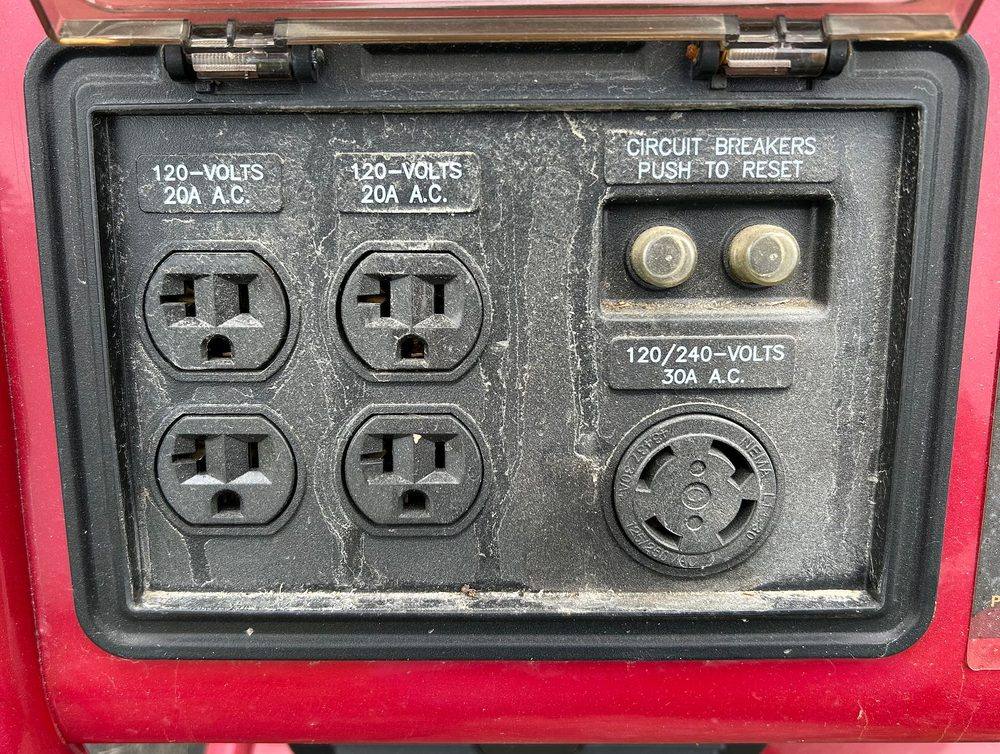
What the breakers look like in place: on this panel they're the two round buttons at upper right, labeled “Circuit Breakers — Push to Reset,” beside the 120V outlets. A tripped one sits popped out — push it back in flush. - Check the panel switches. Voltage selector (where fitted) in the right position for the outlet you're using, idle/auto-throttle switch per your manual, and the correct outlet for the voltage you need — a 240V twist-lock and a household outlet are not interchangeable.
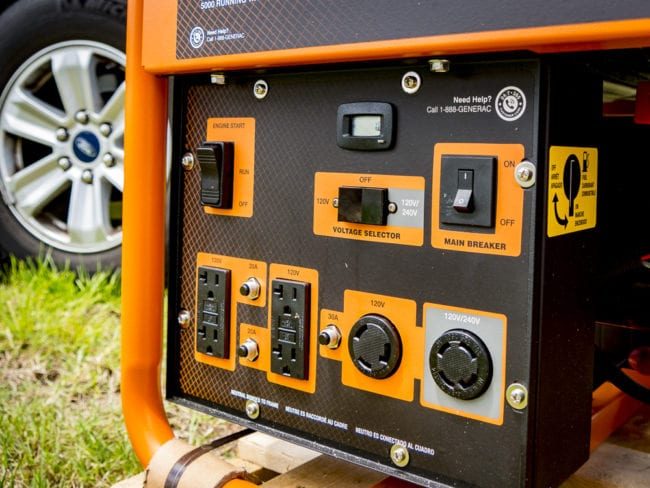
Reading the panel: voltage selector in the center (120V vs 120V/240V), main breaker at right, engine start switch at left — and the round twist-lock is the 120/240V outlet, not a household socket. Match the selector to the outlet you're using. - Test with one simple load. Plug in a work light or a drill — something with no electronics and no startup surge. Power for the test load but not for the house circuit points at the cord, the transfer setup, or the appliance, not the generator.
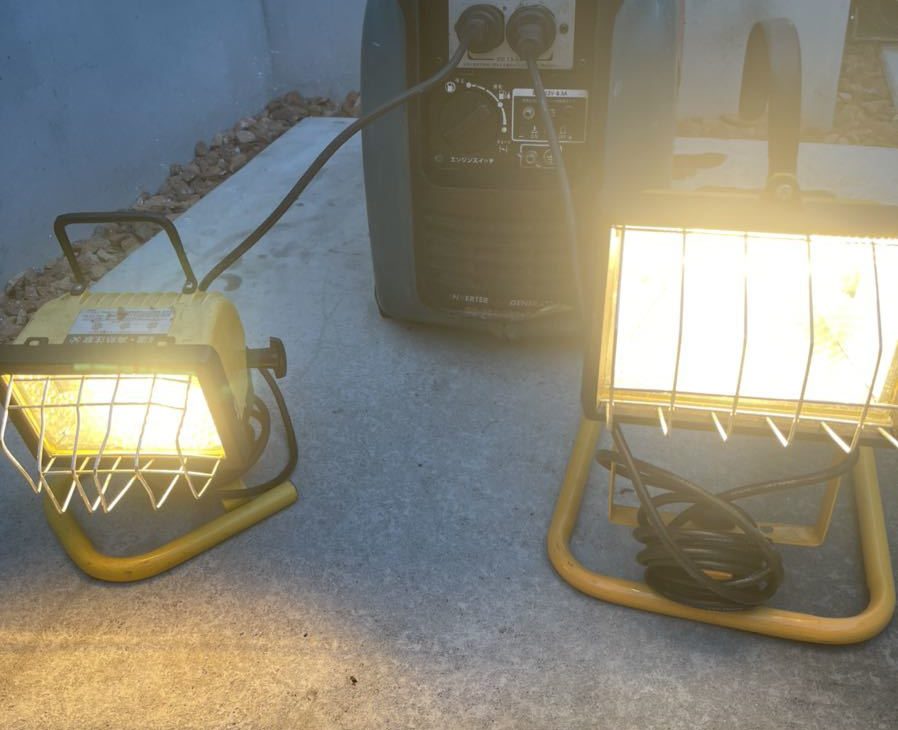
The test that settles it: two work lights plugged straight into the generator's own outlets and lit. Simple loads with no electronics prove the machine makes power before you blame cords or house wiring. - Swap the cord. A damaged or undersized extension cord drops voltage until tools won't run. Test at the generator's own outlet before blaming anything downstream.
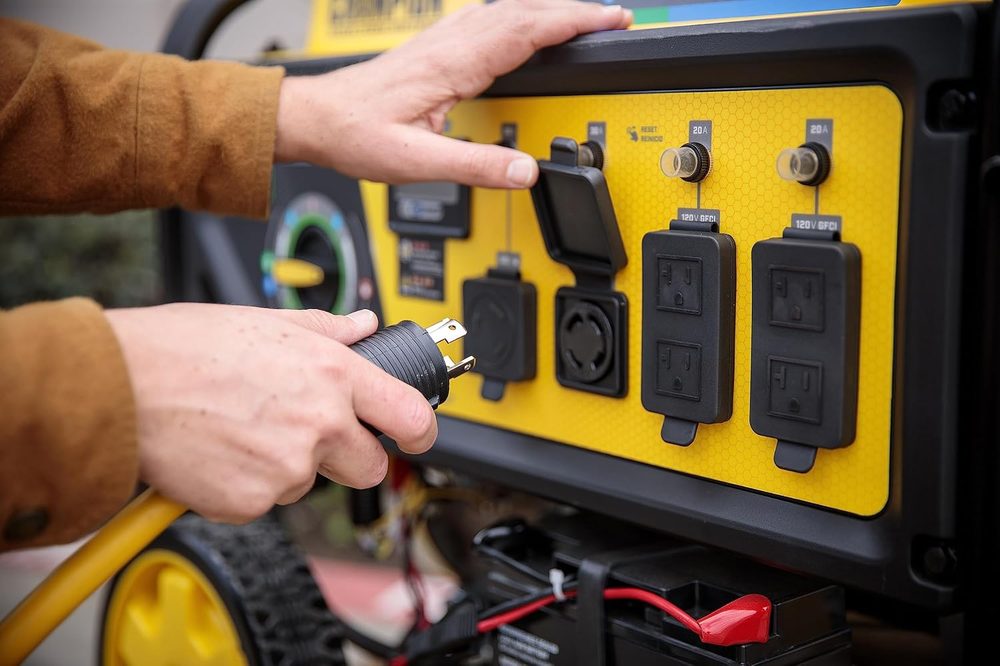
Test at the source: a heavy-gauge cord's twist-lock plug at the generator's own panel, with the covered GFCI outlets beside it. If the load works here but not at the far end of the cord, the cord was the problem.
4 · Runs rough, surges, or only runs on choke
Surging — revs rising and falling in a steady hunting rhythm, lights brightening and dimming with it — is usually the governor: the linkage and spring that hold engine speed (and therefore voltage and frequency) steady get gummed pivots or a stretched spring and start over-correcting. Clean the linkage, confirm the spring isn't stretched or hooked in the wrong hole, and don't bend governor arms by guesswork.
Only runs on choke is a fuel-starvation diagnosis, full stop: clogged main jet, water in the bowl (drain it — a bead of water sits at the bottom and won't burn), stale fuel, or an air leak at a cracked carburetor gasket leaning the mix out. Clean the carburetor first; it fixes the large majority of cases.
Random stumbling under load points back at the basics: a plug breaking down under load, borderline fuel, or a load that's simply at the edge of the machine's capacity (see the wattage math below). Plug first, fresh fuel second, load math third. And check the air filter — a generator that sat in a dusty garage can have a filter packed enough to choke it.
5 · Breaker keeps tripping — do the wattage math first
Most “my generator can't run my fridge” problems are arithmetic, not breakdowns. Every generator has two numbers: running watts (what it can supply continuously) and starting/surge watts (what it can supply for a few seconds). Anything with a motor — fridge, freezer, sump pump, air conditioner, power tools — draws far more to start than to run.
| Load | Running watts (typical) | Starting watts (typical) |
|---|---|---|
| Refrigerator / freezer | 150–400 W | 2–3× running, briefly |
| Sump pump | 800–1,050 W | 1,300–2,200 W |
| Window air conditioner | 900–1,400 W | 2–3× running, briefly |
| Microwave | 600–1,200 W | About the same (no motor surge) |
| Lights, TV, phone/laptop charging | 50–300 W combined | About the same |
Typical ranges for common household loads — check the rating plate or manual for your exact appliance, and your generator's panel for its exact running and starting watts.
The fixes that aren't repairs
Stagger the starts. Let the fridge get running before the pump kicks on. Motors starting in the same second stack their surges, and the breaker sees the stack, not the average. Count everything — the forgotten space heater and the microwave between them can eat a small generator's whole budget. Use a heavy-gauge cord rated for the load and keep it as short as practical; a thin, long cord drops voltage and makes motors draw even harder.
6 · Keep it ready: exercise, storage & outage checklists
A generator's whole job is to work on the one day everything else doesn't. That reliability is built in the months before, in about fifteen minutes at a time.
Monthly exercise (15–20 minutes)
- Start it outdoors, on level ground, and run it under a real load — a space heater, work lights, or power tools — not just idling unloaded. Load is what proves it can do the job.
- Listen while it runs: steady note, no hunting or surging. Catching a gummed carburetor now is an errand; during an outage it's a crisis.
- Check the oil before you put it away, and top the fuel with stabilized gas.
Long storage (over a month or two)
- Add stabilizer and run the engine so treated fuel reaches the carburetor — or drain the tank and bowl dry, per your manual's storage method. Pick one; doing neither is the problem.
- Change the oil while the engine is warm from that run.
- Store indoors, dry, and covered — but never run it in that space, even “just to test it for a second.”
- Electric-start models: keep the battery on a maintainer, or plan to charge it before storm season.
Before storm season
- Do a full test run under load on a dry day.
- Buy fresh fuel — don't start an outage on last season's gas can.
- Stage the heavy-gauge cords where you can find them in the dark, and confirm the spare spark plug is with the machine.
- Write your load list now: fridge first, then pump/furnace fan, then lights — and the running total against your generator's running watts.
Frequently asked questions
Why won't my generator start?
Check the oil before anything else. Most portable generators have a low-oil sensor that deliberately kills the spark when the level drops — and a generator parked on a slope can trip it with oil that's merely lowish. Level the machine, top the oil to the mark, and try again. After that: fresh fuel, fuel valve open, choke set, and plug condition.
Why does my generator start and then die after a few seconds?
Dying in seconds with the oil light flickering usually means the low-oil shutdown is tripping — level the generator and top the oil to full. Dying on a 1–3 minute timer points to a clogged fuel-cap vent vacuum-locking the tank. Dying the moment you open the choke or plug in a load usually means a partially blocked main jet.
Why does my generator run but produce no power?
Check the electrical side first: a tripped breaker or GFCI outlet, the voltage selector or idle control in the wrong position, and damaged cords. Reset the breaker with everything unplugged, then test one outlet with a simple lamp or tool. Still nothing with a healthy-running engine points to the alternator or voltage regulator — a shop test.
Why does my generator breaker keep tripping?
Usually honest overload, not a fault. Add up running watts, then remember a fridge, pump, or air conditioner can draw two to three times its running watts at startup. Stagger what starts, drop one load, and use a heavy-gauge cord. A breaker that trips instantly with nothing plugged in needs a shop — never hold it on or bypass it.
Why does my generator only run on choke, or surge up and down?
Only running on choke means fuel starvation at normal mixture: a partially clogged main jet, stale fuel, or a pinched fuel line. Steady hunting and surging is usually the governor linkage — gummed pivots or a stretched spring over-correcting.
How often should I run my generator so it starts in an outage?
Run it under a real load for 15–20 minutes about once a month. That circulates oil, keeps the carburetor from varnishing, and proves it will start before you actually need it. If it will sit for months, stabilize the fuel or drain the carburetor bowl per your manual.
Can I run a generator in the garage or under a cover in the rain?
No. Run and test it outdoors only, well away from windows, doors, and vents — generator exhaust is a leading cause of storm-season carbon-monoxide deaths, and a garage with the door open is not safe. Keep it sheltered from rain without enclosing it, let it cool before refueling, and keep cords and hands dry.
When is it a shop job, not a driveway fix?
No power output after breaker and GFCI resets with a healthy-running engine, a breaker that trips instantly unloaded, low compression, or a fuel leak you can't trace to a line or fitting. Oil, fuel, plug, carburetor, and overload problems are realistic home fixes.
Still stuck? Run the guided diagnosis
Answer a few questions about your exact machine and symptom on Troubleshoot 101 and get your likely causes ranked, the fix step by step, and the parts to grab near you — the interactive version of this guide.
Start the generator diagnosis →