Inboard & sterndrive guide · Troubleshoot 101
Inboard won't start?
Start at the battery switch.
A MerCruiser or Volvo Penta that refuses to start at the dock is rarely a dead engine — it's a battery switch left off, a lanyard half-seated, last season's fuel separated in the tank, or a shift cable quietly killing the spark every time you put it in gear. This guide works every common inboard and sterndrive symptom in the order a marine mechanic checks them: cheapest and most likely first, haul-out jobs flagged honestly last. Carbureted and EFI, Alpha and Bravo, Volvo Penta SX and duo-prop, raw-water and closed cooling.
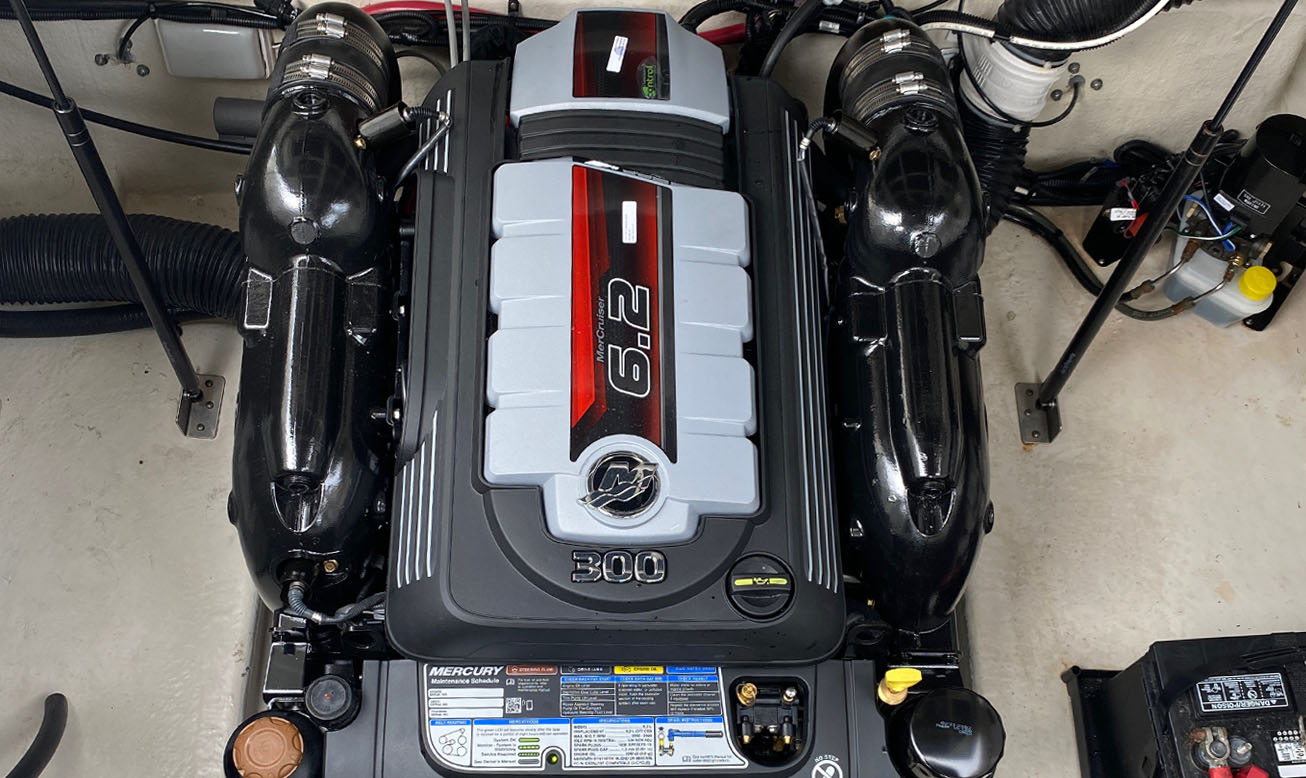
- Bilge blower ON — run it a full 4 minutes, lift the hatch, and sniff. Fuel smell? Stop. Find the leak first.
- Battery switch ON and on a live bank? Terminals clean and tight, not green and loose?
- Kill-switch lanyard clipped fully on, and the control lever truly in neutral?
- When did it last run — and is the fuel in the tank from this season, or last?
- Once it fires: is water moving (exhaust burbling, no temp climb)? No cooling flow: see overheating and shut down.
Carbureted engines (most pre-2000s) have a choke and a mechanical pump — flooding and gummed jets are their classics. EFI engines prime an electric pump at key-on: listen for it.
Raw-water cooled engines drink lake water through the block — impeller and risers are wear items. Closed-cooled engines carry antifreeze in the block and only the exhaust is raw-water cooled. Fixes differ; know which you have.
MerCruiser Alpha: raw-water pump lives in the drive. Bravo and Volvo Penta: engine-mounted raw-water pump, and Volvo's cone clutch shifts without a shift-interrupt switch. Several fixes below split on exactly this.
1 · Won't crank — or cranks but won't start
Sterndrives split cleanly in two here, and the split tells you where to look. No crank at all (silence or a single click) is an electrical path problem: battery, switch, cables, neutral safety. Cranks strongly but never fires means the starter is fine and you're missing fuel or spark. Don't mix the two hunts.
Inboards add three classics an outboard never has: a battery switch with more than one bank, a big engine in a hot closed box that vapor-locks after shutdown, and enough fuel system (tank vent, anti-siphon valve, water separator) to starve an engine several different ways. Work the order below.
| Cause | How to tell | Fix time | Cost |
|---|---|---|---|
| Battery switch off / wrong bank | No crank or click; dash dead or dim | 30 sec | Free |
| Weak battery / corroded terminals | Slow crank, click-click, voltage sags under load | 20 min | Charge free · battery varies |
| Not fully in neutral | No crank at all; lever looks “close enough” | 30 sec | Free |
| Lanyard not seated (crank, no fire) | Cranks strongly, never even coughs | 30 sec | Free |
| Stale / water-contaminated fuel | Sat over winter; sour smell; water in separator sample | 30–60 min | Filter ~$10–25 · fresh fuel |
| Flooded (carbureted) | Strong fuel smell after repeated choke/cranking | 10 min | Free |
| Vapor lock (hot restart) | Ran fine, shut off hot, now cranks dry; fine again cold | 20–40 min cool-down | Free |
| Fouled plugs / tired cap & rotor* | Weak or no spark on tester; damp, green contacts | 30 min | Plugs ~$5–10 ea · cap/rotor kit varies |
| Fuel pump (mech. or EFI electric) | No fuel at carb / no pump prime sound at key-on | 45–90 min | Varies by model |
| Low compression | Fuel + spark confirmed; cranks unusually fast/even | — | Shop job |
*Cap and rotor apply to older distributor engines; most modern MerCruiser / Volvo Penta power is coil-on-plug or distributor-less EFI — check your manual.
The fix, step by step
- Blower first, then battery switch and cables. Four minutes of blower, hatch up, sniff. Then: switch ON and on the bank you expect, and put hands on both terminals — wing nuts finger-loose and green crust are the number-one no-crank on sterndrives. Clean to bright metal, tighten properly, and check the engine ground cable the same way. A multimeter should show about 12.4–12.7 V at rest; much less means charge it before judging anything else.
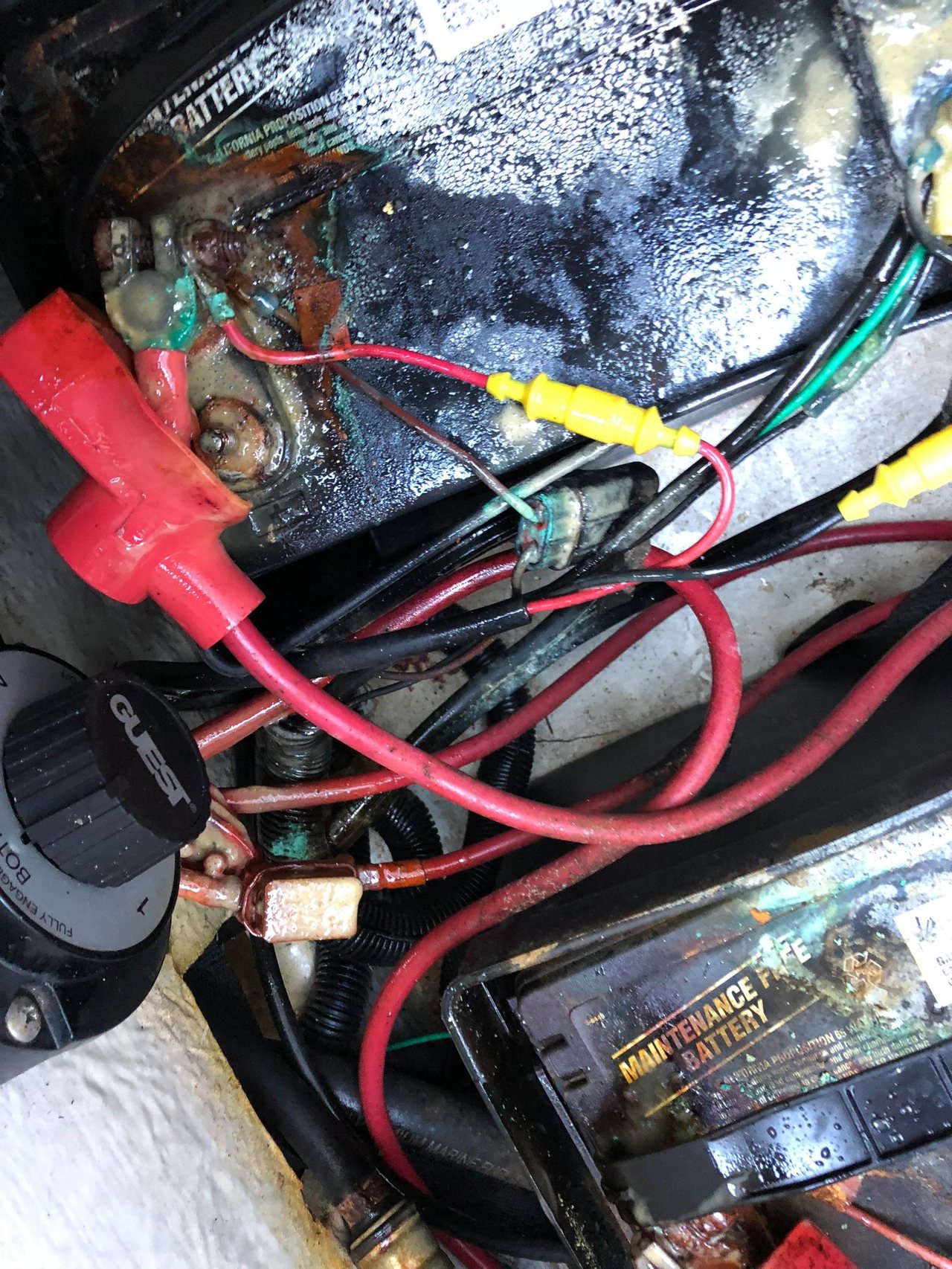
What you're hunting in this step: green crust and tired hardware on the terminals — and the rotary battery switch (bottom left) that feeds them. Clean to bright metal and tighten properly; finger-loose wing nuts are the classic sterndrive no-crank. - Prove neutral, then the lanyard. Wiggle the lever firmly into neutral — the neutral safety switch lives in the control and blocks the starter if the drive is even slightly in gear. For a crank-no-fire, pull the kill lanyard off and clip it back on hard; a half-seated clip is designed to give you exactly this symptom.
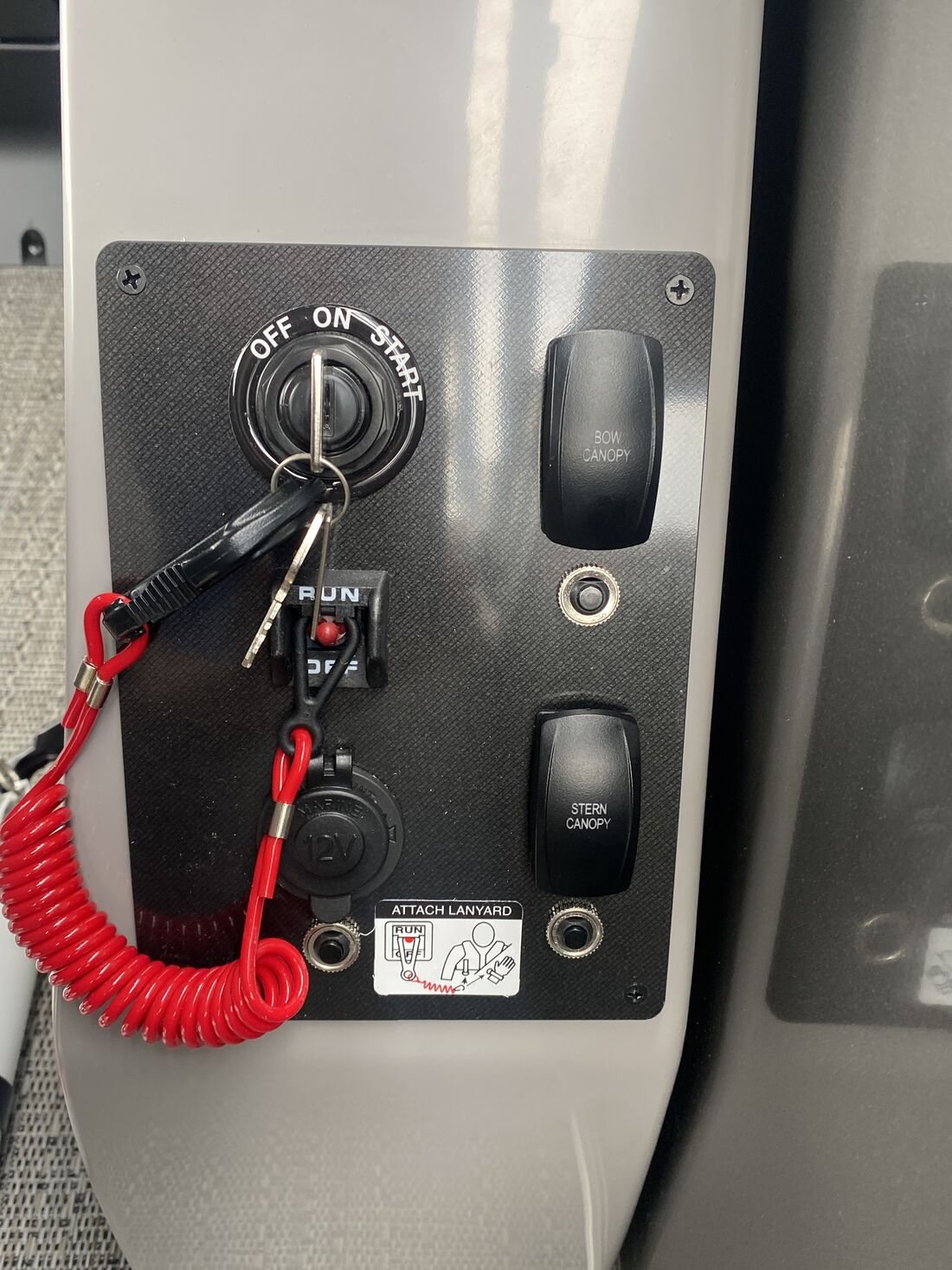
A correctly seated lanyard: the clip is pushed fully home under the kill-switch toggle, holding it in RUN. A half-seated clip gives you strong crank and no fire — pull it off and clip it back on hard. - Drain the water separator into a clear jar. This is the inboard fuel test that matters. Water sinks and shows as a clear layer or beads; cloudy, rusty or debris-filled fuel means the tank is serving bad fuel. Fit a fresh separator element, and if the sample is ugly, plan on draining/pumping the tank toward fresh fuel rather than feeding the engine through filter after filter.
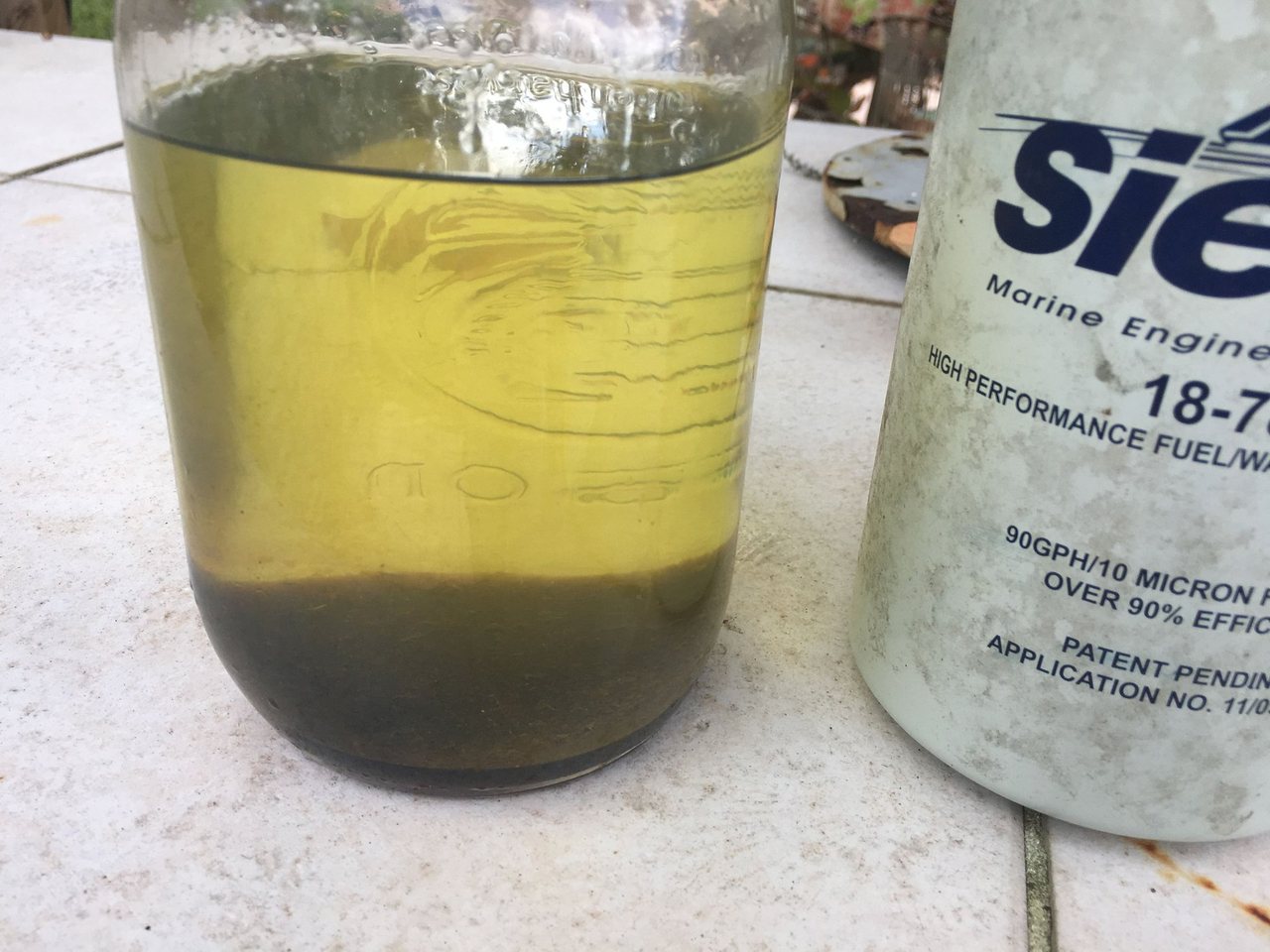
A failed sample: fuel on top, a dark layer of water and debris settled underneath — drained from the separator element beside it. Healthy fuel stays one clear, even colour; any layer, beads or cloudiness is the tank telling on itself. - Carb or EFI — confirm fuel is arriving. Carbureted: pump the throttle once and watch for the accelerator-pump squirt; choke plate should be closed on a cold engine. No squirt = no fuel in the bowl: check the anti-siphon valve at the tank (it sticks shut after storage), the pump, and lines. EFI: at key-on you should hear the electric pump prime for a few seconds. Silence = check pump power, relay and fuse before condemning the pump.
- Clear a flood before chasing spark. On a carb engine that's been cranked and choked repeatedly: throttle fully open, choke off, crank in short bursts. Raw-fuel smell fading means you're winning. Pulling a plug and finding it wet confirms it.
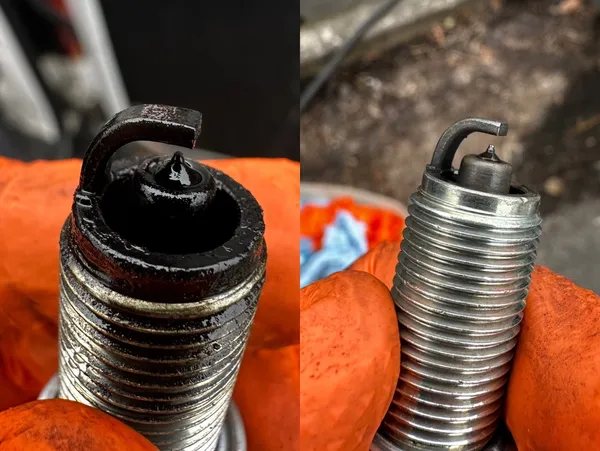
Confirmation of a flood: a plug pulled out wet and black with fuel (left) against a dry plug (right). A wet plug means the cylinder was flooded — clear it with the throttle wide open and the choke off before you chase spark. - Test spark with an inline tester — don't guess. Strong blue spark on all leads rules ignition out; weak orange or none points to plugs, then (distributor engines) a damp or tracked cap and worn rotor, then coil or ignition module. On MerCruiser Thunderbolt and Volvo EFI systems, a module that sparks cold and quits hot is a known pattern — if it dies when warm (section 2), test spark immediately after the stall.
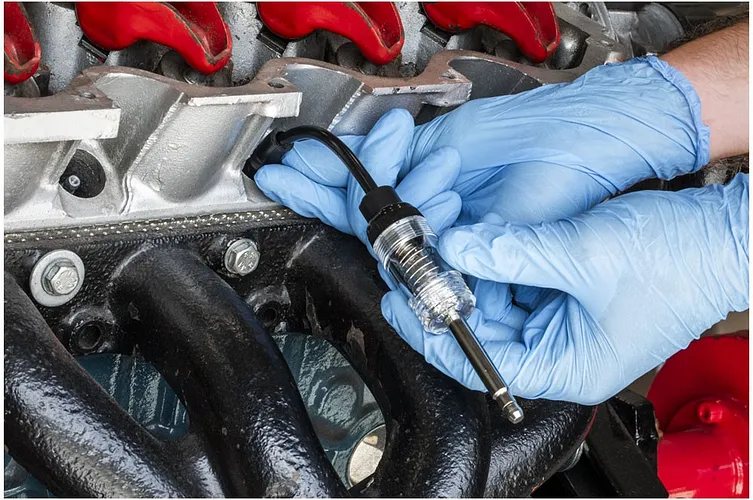
The tester goes in series, right where the plug lives: wire boot onto one end, the other end onto the plug, then crank and watch the window. A steady flash means the ignition is doing its job — dark or erratic means work down this step. 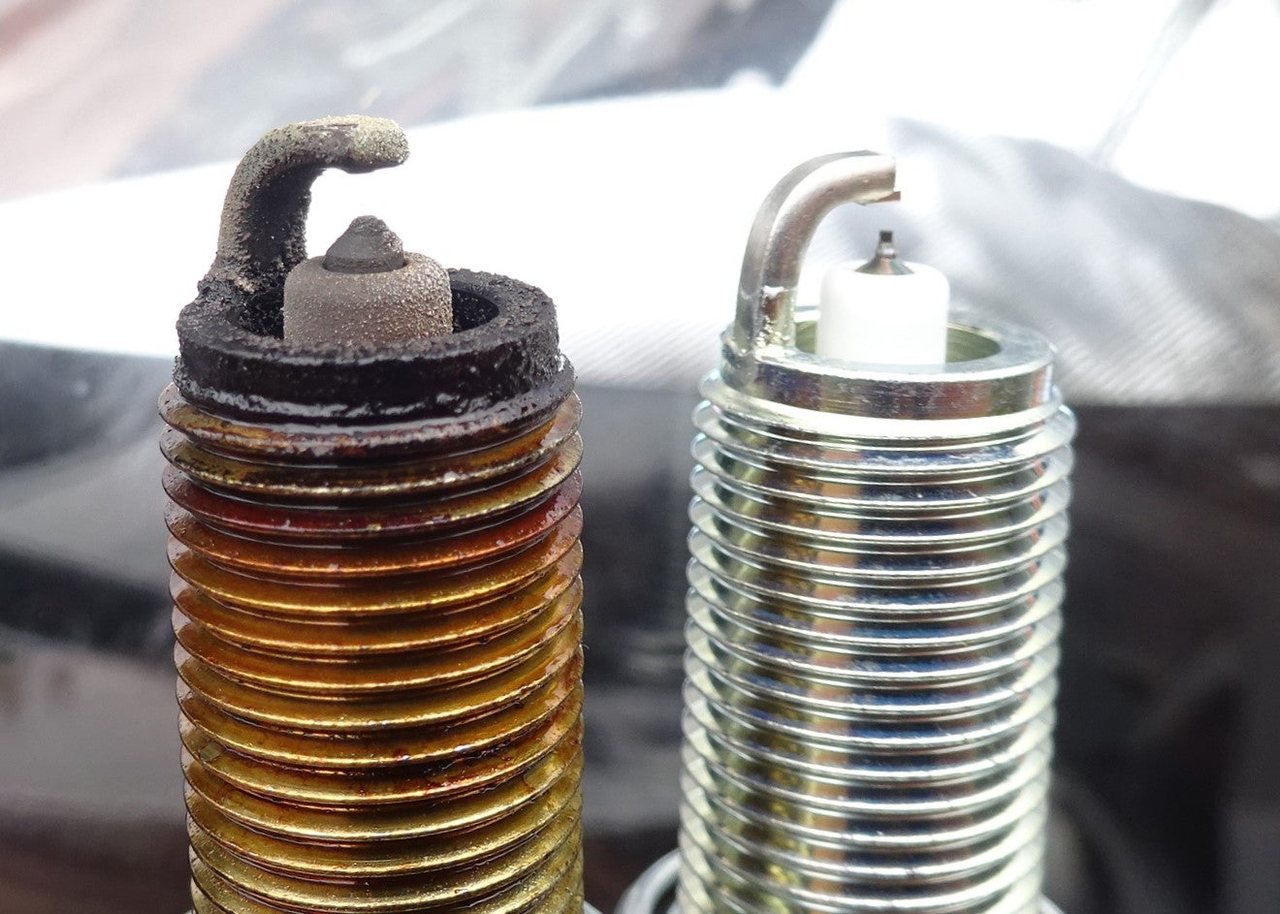
And this is what you're checking for when you pull one: a failed plug (left) black with carbon, rusty threads, eroded strap — next to a new one. If yours looks like the left, plugs are the fix, not the module. - Hot engine that ran an hour ago? Suspect vapor lock, not parts. Heat soak boils fuel in the lines or carb bowl after shutdown. Blower on, hatch open if safe, wait 20–40 minutes and retry before buying anything. Repeat offenders: check fuel lines routed tight against exhaust manifolds and risers, and a tired mechanical pump that can't push past the bubbles.
2 · Starts, then dies — or stalls when you shift
An engine that starts has fuel, spark and compression. Dying means one of them leaves — and when it leaves names the culprit.
Stalls the moment you shift into gear — MerCruiser Alpha's signature fault
Alpha drives can't pull the gears apart under load, so MerCruiser fits a shift interrupt switch: as you shift, it cuts ignition for a split second so the clutch dogs unload. When the lower shift cable gets stiff and worn (they all do), it drags, holds the switch on, and the “split second” becomes the whole shift — the engine dies every time you click into forward or reverse, then restarts instantly in neutral. The fix is the cable (and correct adjustment), not the switch and not the idle speed. Volvo Penta drives use a cone clutch and have no interrupt switch; neither do Bravo drives — on those, stalling into gear points to a low rough idle, an idle-air control fault on EFI, or a gummed carburetor idle circuit.
Dies on a timer — runs minutes, quits, restarts after sitting
Two candidates. The anti-siphon valve at the tank outlet sticks half-shut and meters out a slow starvation. And the tank vent: blocked by an insect nest or a kinked hose, the tank vacuum-locks exactly like an outboard's closed cap — loosen the fuel fill and listen for air rushing in. Sitting lets pressure equalize, so it restarts like nothing happened.
Dies hot, restarts cold, every time
Heat-soaked ignition. A coil or ignition module that tests fine cold opens up hot and the engine stops like the key was turned. Catch it in the act: inline spark tester on immediately after the stall. No spark hot + spark cold = ignition component, and throwing fuel parts at it will not help.
Dies as you throttle up off idle
It idles on the bowl but can't transition: clogged main circuit in a carb, a failing fuel pump that can't keep up, or a separator element choked with the season's first tank of stirred-up debris. Change the separator first on any springtime boat — it's the cheapest fuel-flow test there is.
3 · Overheating — at idle, at speed, or both
Overheating kills more inboards than everything else in this guide combined, because the alarm gets “one more minute” and a cast-iron block doesn't forgive it. Temp climbing past normal or the alarm sounding = idle down, neutral, and shut it off if it doesn't fall immediately. Then split the diagnosis by pattern:
Hot at idle and speed — no water is moving
Start at the supply. Drive intake screens or the hull intake blocked with weeds, plastic, or barnacles. Sea strainer (where fitted) full of debris. Then the raw-water impeller — the rubber wear part that does all the pumping. On an Alpha drive it lives in the drive's lower unit; on Bravo and Volvo Penta it's an engine-mounted pump at the front of the engine. Vanes crack and take a set in storage, shred in sand, and disintegrate in seconds if the engine is ever run without water. If pieces are missing, find them — they lodge in the oil/heat exchanger or thermostat housing and keep blocking flow after the new impeller goes in.
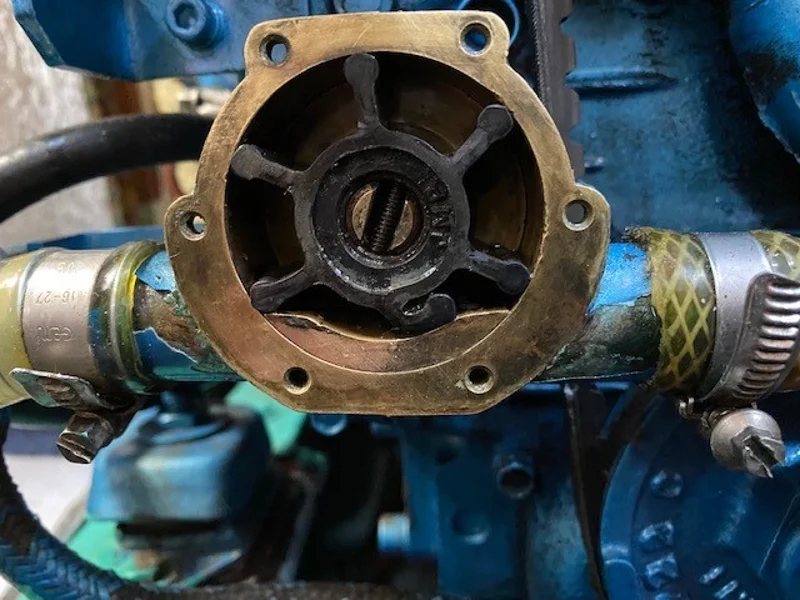
Fine at idle, hot at speed — supply can't keep up
A tired impeller moving some water, a collapsing intake hose, or — the big one on raw-water-cooled engines — exhaust manifolds and risers narrowing with rust and scale inside. Risers are consumables (roughly 3–5 seasons in salt water, longer in fresh, per most makers' guidance): when their water passages choke, the engine overheats under load and can eventually leak water into a cylinder. A riser that's much hotter to the touch than its twin, or rust weeping at the manifold joint, is telling you its age.
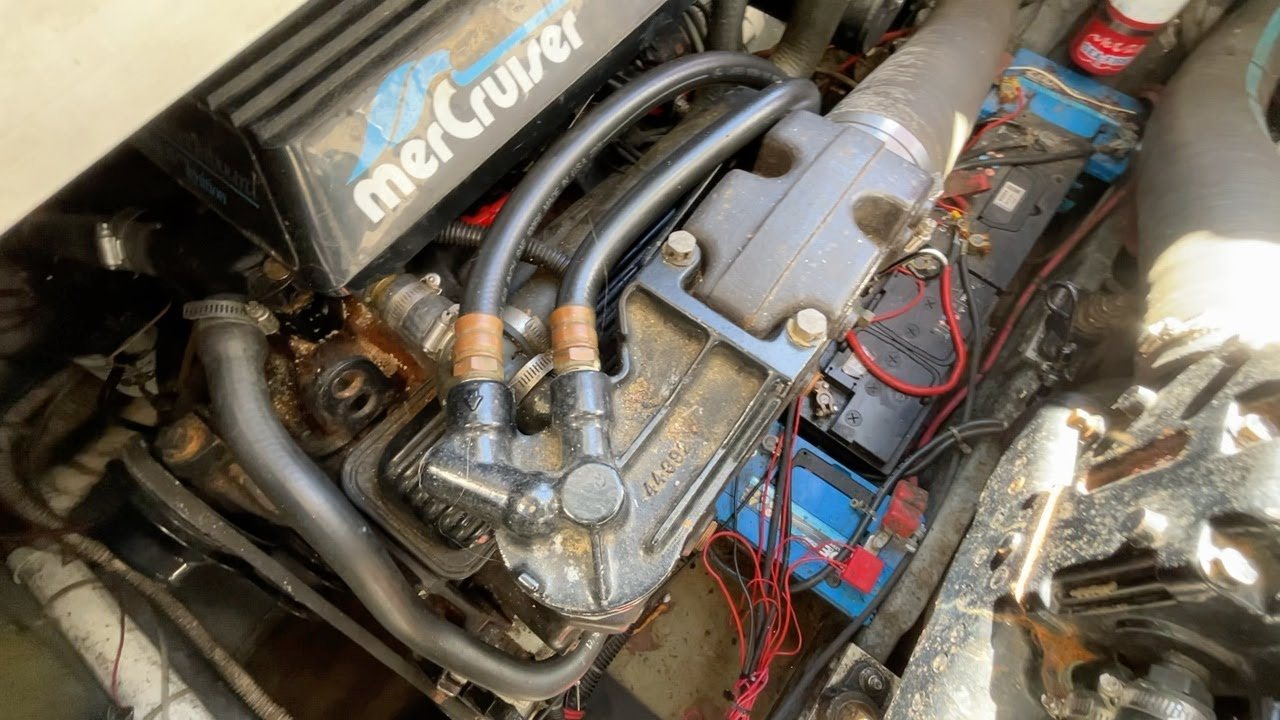
Closed-cooled engines: check both circuits
Coolant low in the heat exchanger, a slipping belt on the circulating pump, or a stuck thermostat will overheat a closed-cooled engine with a perfect raw-water side. And the thermostat itself, on any system: stuck closed overheats fast and everywhere; stuck open runs cold and rich, which owners ignore until the plugs foul.
4 · Shifting & drive problems — clunks, grinds, and no drive
Everything from the flywheel to the prop is one chain: coupler, U-joints, gears, shift cable, prop hub. Each link fails with its own sound, and the sound is the diagnosis.
Clunks hard into gear, or grinds
A firm single clunk at idle is normal dog-clutch behaviour on an Alpha. Grinding, ratcheting, or needing throttle fiddling to engage is not: suspect a stretched or worn shift cable that no longer travels far enough, or idle speed set too high (a fast idle slams dogs and chews them). Adjust idle to spec first, then cable travel per the manual — cable adjustment on an Alpha is precise work; guesswork here eats gears. Volvo cone-clutch drives engage smoothly by design, so a clunking Volvo usually means low drive oil or a worn cone — check the oil level and condition first.
Jumps out of gear under load
Worn clutch dogs (Alpha) from years of slow, gentle shifting — dog clutches actually prefer one firm motion — or a cable that's drifted out of adjustment and only half-engages. Confirm cable adjustment before condemning gears; half-engagement both causes and accelerates dog wear.
Engine revs, boat barely moves, burnt-rubber smell
The engine coupler: a rubber-hubbed disc at the flywheel that joins engine to drive, and the inboard world's equivalent of a spun prop hub — except it usually fails completely, often after misalignment or a tired gimble bearing has been vibrating at it for seasons. Revs flare, thrust doesn't, and hot rubber smells from under the hatch. Rule out the free version first (a spun prop hub: mark hub and shaft, run, check the marks), then accept it: coupler replacement means separating engine and drive — a shop job for most owners, and the alignment gets checked on reassembly or the new one dies young too.
Growling or rumbling that changes when you turn
Gimble bearing and U-joints. A growl at idle in neutral that changes pitch when you turn the wheel or trim is the gimble bearing asking; U-joint knock at full lock is its cousin. Both live behind the bellows — which is why bellows condition (section 6) matters: the water that gets in through a torn U-joint bellows is what kills them.
5 · Lacks power — won't plane, bogs, or lost top speed
Same discipline as the outboard guide: work from the stern forward, because the cheap causes are at the back — and sterndrives add trim and exhaust to the list.
Prop and bottom first
A nicked or bent blade, a prop with the wrong pitch for a now-heavier boat, or a spun hub (line test, section 4) all read as “engine lost power.” So does a fouled bottom — a season's growth can cost several mph and the ability to plane with a load, and no tune-up fixes drag. Scrub and inspect before touching the engine.
Trim and load
Drive trimmed too far out porpoises and ventilates; too far in plows. A sterndrive that “lost power” after a trim sender or limit fault — or with everyone and the cooler in the stern — is a setup problem, not an engine problem. Confirm the drive actually moves through its trim range.
Then the engine under load
Fuel starvation shows at planing load first: separator element, anti-siphon valve, weak pump, kinked line. On carb engines a partially blocked main jet does the same thing (partial choke restoring power confirms fuel delivery). Ignition that can't advance — a module or sensor fault on EFI, a stuck advance on old distributors — leaves idle perfect and top end flat. And sterndrive-specific: exhaust restriction. Exhaust flappers (shutters) in the Y-pipe can burn, break loose and lodge in the exhaust path after an overheat-with-no-water event, choking the engine at speed while it idles innocently. If power loss followed any dry-run or overheat, put flappers on the list.
6 · Prevent it: winterizing & spring checklists
Inboards punish skipped layup harder than any other engine in this series: there's a cast-iron block full of water, manifolds full of water, and rubber bellows keeping the lake out of the boat. One hard freeze on an undrained block can crack it — the most expensive sentence in boating.
End of season (the afternoon that matters)
- Stabilize the fuel and run the engine on muffs long enough for treated fuel to reach the carb/injectors — or drain per your manual's method. Pick one; doing neither is the problem.
- Drain the block, manifolds, and coolers completely — every drain plug and hose your manual lists — then (if your procedure calls for it) fill with marine antifreeze. Poke each drain with wire: rust flakes plug them and leave hidden water behind a dry-looking plug.
- Change engine oil and filter warm, fog the cylinders (carb) or follow the EFI storage procedure, and change the drive gear lube now — and read the old lube. Milky = water got in; find out where over winter, not at the launch.
- Inspect the bellows (U-joint, shift, exhaust) inch by inch for cracks, stiffness and splits. Pull the drive if your interval is due — gimble bearing and U-joint condition are only knowable from in there.
- Grease the gimble and steering points, check anodes and replace any more than half gone, and note the impeller's age — 2–3 seasons is the rhythm.
- Battery out or on a maintainer, terminals clean, stored where it won't freeze flat. Clip the lanyard to the keys so spring-you finds both.
First launch (in the driveway, on muffs)
- Drain plugs back IN? The classic spring sinking / instant overheat is a block or manifold plug left on the workbench. Physically touch each one.
- Run it at home on muffs and watch: water flow, temp gauge behaving, no leaks at manifolds, risers and hoses softened by winter, belt condition and tension.
- Bellows look again in daylight; any new crack changes the plan. Check drive lube level and the reservoir (Bravo / Volvo) if fitted.
- Blower actually blows (they die quietly over winter), bilge pump cycles on its float, and the battery switch does what the label says.
- Shift into forward and reverse briefly on muffs only if your manual allows — otherwise confirm engagement at the dock at idle, and confirm it comes back OUT of gear cleanly (shift interrupt check, Alpha).
- Fresh fuel for the season over whatever was stored, separator element new, spare prop and plugs aboard.
Frequently asked questions
Why won't my MerCruiser or Volvo Penta start after sitting all winter?
Start with the three sterndrive classics: the battery switch left off or on a dead bank, a battery that died in storage, and last season's ethanol fuel that absorbed water and separated in the tank. Then run the no-start sequence: blower on, lanyard clipped, control in neutral, drain the fuel/water separator and look at what comes out, and confirm spark. Most spring no-starts are solved in that order without a single part.
Why does my sterndrive click but not crank?
A single click with no crank is almost always electrical, not a dead starter: a weak battery, corroded terminals or ground, or the battery switch on the wrong bank. Clean the terminals, charge and load-test the battery, and confirm the control is fully in neutral — the neutral safety switch blocks the starter if the drive is even slightly in gear.
Why does my inboard stall when I shift into gear?
On a MerCruiser Alpha drive, the shift interrupt switch deliberately cuts ignition for a split second to unload the gears during a shift. A worn or stiff lower shift cable holds that switch on too long and kills the engine outright — stalling on every shift is its signature, and the cable is the fix, not the switch. On Volvo Penta drives (cone clutch, no interrupt switch) and on Bravo drives, stalling in gear points instead to a low, rough idle or a carburetor / idle-air problem.
Why does my sterndrive overheat at speed but stay cool at idle?
That pattern is a water-supply problem that only shows under load: a raw-water impeller with cracked or set vanes, a partially blocked intake or sea strainer, or — on older raw-water-cooled engines — exhaust risers and manifolds narrowing with rust and scale. Check the impeller first; if a new impeller doesn't cure it, the risers are the usual next suspect on a salt- or brackish-water boat.
Why won't my boat restart when the engine is hot?
Vapor lock is the classic inboard hot-restart failure: heat soaking in a closed engine compartment boils fuel in the lines or carburetor bowl after shutdown, and the engine cranks dry. Run the bilge blower for several minutes, open the hatch if it's safe to do so, and let things cool before cranking again. If it becomes a habit, check for fuel lines routed against hot exhaust parts and a weak mechanical fuel pump.
Why does my engine rev but the boat won't move?
If the engine revs freely, the drive seems to shift, and there's a burnt-rubber smell from the engine compartment, suspect the engine coupler at the flywheel — its rubber hub has sheared and the drive is no longer connected to the engine. That is a shop job. Rule out the free causes first: a spun prop hub (mark the hub and shaft and see if the marks separate) and a shift cable that isn't actually engaging gear.
How often should sterndrive bellows and the impeller be replaced?
Inspect the bellows every season for cracks, stiffness and water in the drive — replacement is typically a 2–3 season item, and a torn U-joint bellows sinks boats and destroys U-joints and gimble bearings. The raw-water impeller is a wear part on roughly the same rhythm: every 2–3 seasons, sooner if the boat sat, ran in sand, or was ever run dry. Always check your model's manual for its exact intervals.
When is an inboard or sterndrive problem a shop job, not a dock fix?
A failed engine coupler, water in the drive (milky gear lube) or a torn bellows with a noisy gimble bearing, cracked manifolds or block from freeze damage, low compression, and overheating that continues after a new impeller and thermostat. Battery, fuel, spark, shift-cable and impeller work is realistic at the dock or on the trailer with basic tools and your model's manual.
Still stuck? Run the guided diagnosis
Answer a few questions about your exact engine, drive and symptom on Troubleshoot 101 and get your likely causes ranked, the fix step by step, and the parts to grab near you — the interactive version of this guide.
Start the inboard diagnosis →If it helped you, consider a tip.
Leave a tip